
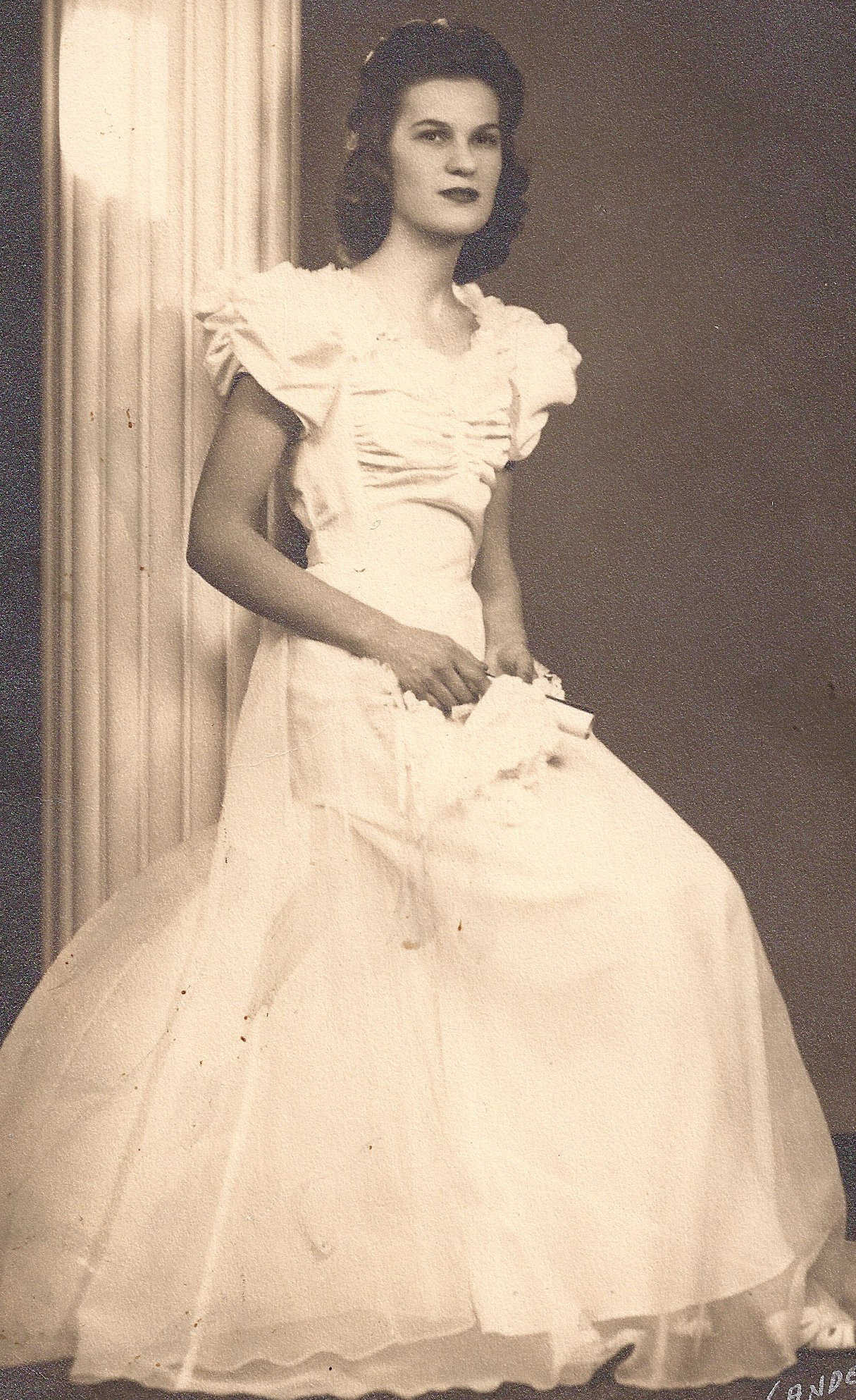
“So Long as we have food on our table, I won’t let anyone else go hungry!” answered Angela to her husband’s warning not to feed every man who came to her door. It was soon after her husband, each of his three brothers and her five brothers returned from WWII that Angela began feeding the homeless who knocked on her door. Hobos, they were called, who had ridden the trains cross country, looking for work. Most had been soldiers, airmen, or sailors; now just trying to be useful, and survive an uncomfortable and confusing civilian life. At Angela’s door they were welcomed with a smile and hot food, and a sandwich and fruit in a brown lunch bag to take with them. Before leaving they could be found cleaning out gutters, painting the garage door, pulling weeds from the curb crease. “They could be you,” Angela would remind her husband; “and, I hope someone would have fed you if you were hungry.” Angela did become curious as to why so many men came to her door rather than other doors on the street. One hobo showed her she had been marked as a “kind woman who will feed you” with a coded chalk mark on the curb in front of her house.
The homeless did not seem fearsome to her children, just visitors who enjoyed their Mother’s food like any other visitor to their home. No one was allowed to leave unless they had first had something to eat at Angela’s table. She would tell her children, “I remember what it was like to go to bed hungry. My brothers stole milk off porches to bring home to us. Sometimes that is all we would have to eat that day.”
On her daughter’s 5th. birthday she took to the streets on her new Huffy bike with training wheels. A year later, the wheels were off, and she was free to ride the neighborhood closely guarded by the Italian family and friends who lived among the now retreating German immigrants who had “moved up” into middle class neighborhoods. On every block were two or more Italian grandmothers sitting on the porch keeping tabs on the neighborhood children: Annarinos, Akes, Angelettis, DiBlasios, and Corsis vigilantly covered the south end. Angela’s daughter felt safe enough to ride to the river, drop her bike by the side of the dike and climb over it into the Tectum drywall dump where she and her brothers had built forts.
Hobos sometimes slept in their forts. She loved the stories they shared with her, and she could be found sitting around their campfires as they swapped tales of glory and remorse. She also shared cans of beans heated in the flames, passed around the circle with a shared spoon. No one never knew about these afternoons with the hobos. Instinctively, she knew these men were misunderstood and needlessly feared. She did not even tell her Mother. Not because she was banned from talking to hobos; but, because she was banned from the river and the dump.
And still, the wandering soldiers and sailors return, too often feared; too often, ignored. Homeless, jobless, weary beyond all understanding by those of us who live in peaceful worlds with food on our tables. Angela would be ashamed of what she sees happening today. For today’s homeless include women and children, people forced out of their homes and jobs by the greed of investors seeking exceptional profits rather than expecting CEO’s to reinvest in companies, spend profits on research and development for long-term growth; unwilling to pay taxes to support local schools, build their own infrastructure and pay public employee salaries. Corporate boards buy off CEO’s of our corporations and universities with exorbitant salaries and bonuses; until they are forced to lay-off workers, increase tuition, reduce salaries-pensions-healthcare, ignore environmental and safety regulations, or relocate to foreign countries to make the profits ever higher to satisfy Wall Street’s greed.
Some things never change. It is not Wall Street’s greed which causes us to forget we are a community of people relying on each other for survival. It is our own greed and our own fear. It is our fear someone else will get more than we have. Our fear that sharing what we have will make another stronger. And our fear of “the other”, those who may be of a different race or nationality, have mental health issues, or simply difficulty coping, who just returned from repeated war zones, who have never had family security, who have been beaten and abused. We don’t fear them because they are “not like us”; we fear them because they are JUST like us. We fear that we could all too easily become one of “them”. And so we shun them, and try to forget they exist. We turn a deaf ear to their pleas and arrest anyone who would occupy Wall Street, or main street.
What would Angela tell us today? “Open your doors and feed everyone; make a seat at your table for anyone who needs you, not just for food, but for love.” I know she would say this. How do I know? Because, I am Angela’s daughter.

 annarino writes
LABOR DAY 2022
My earliest memory of Labor Day was being lifted by my father from the stroller and placed on his shoulders. I remember feeling I might fall back and my mother’s hand holding me in place while she warned my Dad, “Be careful, honey.” Dad still had on his apron. He left work with his wife and children to watch the parade striding past his restaurant. I have no idea if the doors to the restaurant were left open. My guess is, knowing how the family business functioned, some uncle stayed inside to keep company with those already sitting at the bar this early in the morning. We never missed a parade.
Labor was honored in this Ohio factory town surrounded by farms. The parade was huge. The parade started a block away from the restaurant so we watched the parade walkers gather and assemble, the floats line up, the horses struggle against the urge to run, held pacing in place by their riders. We kids rejoiced in the front row view with insight into parade warm-up.
Every workplace, it seemed, had a float and/or groups of walkers. Factory workers carried their union flags and smiled as they passed out candy to the kids. Flags were in abundance. Everyone in town participated in some way. Boy scouts and bands, dance and gymnastics academies, florists and glass blowers…farm equipment, police cruisers and fire trucks…politicians in cars, their wives and children smiling and waving.
The parade queen was slightly less popular than the military and VFW contingent led by soldier, sailor, airman and marine cadres, followed by equipment from the local National Guard Armory. The soldier most vivid in my post-World War Two memory wore an unusual uniform. Dad explained he was one of the last living Civil War Union Army survivors. I shall never forget that man, ancient and proud of his service to country. He was bigger and better than the tanks, to me.
When I was about four or five years old I was considered old enough to sit on my dance school float. We were placed between two high school bands. It was deafening, if jaunty. I always got nosebleeds in the hot sun. Thus, I held a handful of increasingly bloody tissues in my hands; so, I could not wave at the crowd, nor wave away my humiliation. That never stopped me from climbing aboard the float. I simply learned humiliation should never get in the way of trying something new, and being part of the community. The ability to embrace humiliation cannot be underestimated. It has gotten me through every stage of life.
Farmers and factory workers lived and worked together in my small town. On Saturday afternoons farmers’ trucks and factory workers’ trucks were parked side by side on the town square while their wives shopped, kids sat on benches eating ice cream, and the men stopped into my dad’s restaurant for a quick drink. Later their families would join them for dinner there. Many of the farmers also worked in the factories, the unions protecting them both. A strong middle class grew in strength recognized by politicians as crucial to the country’s national defense. Post-war workers and politicians valued the middle class and encouraged its growth.
As I left for college the town was changing. A conglomerate was formed to shut down and take over local dairies, United Dairy Farmers was not a union protecting dairy farmers. It started the downward slide of strong family farms, substituting investor controlled farming which has usurped most of American farm production despite the current interest in “farm to table”. for centuries Farm to Table was firmly in place; until, investors saw a way to make money off the labor of farmers. Factories eliminated Research and Development divisions, relying on the easy gain to pay investors profits rather, than plowing profits into future gains which would ensure job growth and livable wages. Workers and farmers became serfs to investors. Today, even doctors and hospitals have become serfs. Wall Street investors now control their schedules, their workplace conditions, their decisions while practicing medicine.
To make such a return to serfdom succeed unions had to be undermined and destroyed. After a short time, the parades ceased. Celebration of serfs’ labor made no sense. Companies which no longer invested in future growth and sound wages certainly would not invest in parade floats. Undermining union strength and avoiding the growing recognition that regulation of pollutants, safety for workers, and labor rights was accomplished by moving factories overseas. Acres and acres became ghost towns where workers mourned lost jobs.
Brown fields blocked recommissioning the use of these acres to other uses. The costs to small towns was monumental. Politicians no longer valued workers but investors. Labor day lost it meaning. It simply became another day to sell hot dogs and potato salad, and lawn tents for family picnics, to those underemployed or out of work; cheap food for those no longer receiving a living wage.
There is a resurrection going on. Over a million Americans have died in the Covid pandemic. The ongoing endemic and threat of more pandemics to come with global climate change disclosed a reduced work force. The broken immigration system, refusal to acknowledge existing refugee laws, and racial prejudice have further reduced our workforce. Supply chain issues have exposed the flaws in sending production of goods overseas, only to get stuck and threaten economic growth.
These insights are giving rise to re-unionization of the American workforce. Our young workers have had it with wages so low they must have two to three jobs, cannot afford training or retraining to higher paying jobs, and must live in their parents’ basements. Workers refuse to remain serfs, working for Wall Street instead of Main Street. Workers have reason to hope this Labor Day. I only hope the parades can resume someday before I am gone. I eagerly await an epic Labor Day Parade as wonderful as those I attended as a child. It would mean labor is once again recognized and properly valued. I wish the same for workers everywhere. Higher wages, more parades. Workers unite!
Leave a comment
Filed under COMMENTARY
Tagged as farmers, Labor Day, Main Street, marching bands, parades, politics, serfs, wall street, workers