

When we become isolated as we did for Covid 19 we stopped meeting those good souls who bring light and laughter to our world. We have along way to go to heal that sense of isolation. We can do it one moment at a time.
If we rely on social media, the entertainment industry, or even the news to bring others to us we face the stories least likely to display the inherent goodness of man and beast. “If it bleeds, it leads” rules our airwaves, our social media accounts, our own prurient interest.
This does not only damage our children, as studies show. It damages all of us. It is no wonder 38% percent of Americans sought mental health care during the past year.
Putting down the cell phone, closing the I-Pad, shutting down the computer is a life-affirming act. Engage other human beings who may be on their devices trying to connect with somebody, with anybody! Make eye contact whenever you get the chance. Interrupt your silence while waiting in interminable lines that have become the service sector’s bane, caused by understaffing. Talk to others waiting with you. Not, with a complaining voice; but, with an interested voice. The world lost millions of people who were productive workers, who made things run smoothly for all of us. Feel their loss with compassion for them, and for those left behind trying to fill their shoes. There is no fault in trying to cross fault lines with generosity for others’ struggles. Look in the face of the disgruntled worker at the fast food counter. Ask how they are doing. Listen and watch their expression ease. Perhaps, even garner a smile.
We are human beings doing our best with all that we have. Some of us have more to work with. Some of us have less. Everyone struggles with something. We need not carry others’ crosses. But, we can walk beside them, act as witness and ally to their struggle, encourage and support them with our strength, our love, and our respect.
This week has been one filled with unpleasant errands. Each time I was helped by someone who had few smiles and was overwhelmed by work. Yet, each person responded to my request for help with a gentle regard. Each person became more relaxed, smiled more, even laughed as I looked them in the eye and asked about their lives as they bent to the task of helping me. They performed acts of kindness, as they probably do hundreds of time a week. As I leave, I always tell such workers to thank their mother for raising such a wonderful son or daughter. Everything about their demeanor comes alive. They stand taller. Their shoulders drop and pull back. The creases around their mouth disappear. Their smiles appear. Everyone is someone’s child. everyone needs to be noticed. Perhaps, if we pay more attention to those who do good, more of us would be good.
I am guilty, too often, of bringing attention to the fools of this world who legislate, print, speak, and promote hate. Today, I want to remind myself and you of all those who courageously do good, despite being ignored and even disrespected. I want to thank all those who devote their hours, days and lives to being there when needed by others: the surgeons doing open-heart surgery on two of my dear friends, the UPS clerk who returns unwanted Amazon purchases, the tire guy who explains how tires work and deteriorate over time and which brand works best just for my car, the pharmacist who fills a prescription and the tech who answers questions over and over and over, the phone scheduler who finds a location with ease of access not simply an open date for an appointment, the neighbor who put out my recycling bin and returned it to its proper spot without being asked, the friend who called who really had nothing to say but “I love you”; yet, not in those words.I enjoyed my wait at the car dealer with the Muslim woman who spoke of teaching her children to pray and know the Koran at summer camp and listened to my story of teaching Catholic children prayers and the Bible in public-school-kid summer camp, the Italian-American woman who laughed as we shared family stories only Italians would find funny while we all waited. Lest I forget my beastly friends, thanks to the feral cat who chased the rabbits out of the garden, the songbird trilling a song while hundreds of fireflies danced in my yard last night.
There are so many ways to hide from one another. There are few good reasons to do so. Those reasons which do require hiding are fraught with danger and not to be ignored. But, too many times, our fears our unfounded. They are based on prejudice and ignorance. Too many times, we are simply afraid to look foolish. I challenge you to look like a fool today. Talk to someone you have never met, nor been introduced to as if they were a long-lost friend. You might just find out that they are your friend, even if just for a moment in time. The moments add up. Trust builds. Hope builds. Faith builds. And most importantly, love builds. Few of us are great. Few of us are famous. Few of us have any clue what we are about. But each of us can look others in the eye and speak, then listen with respect and interest. One moment at a time we can reconnect our world, a world where trust in one another creates a free, peaceful, and loving union of our citizens.





 annarino writes
LOVE ‘EM OR HATE ‘EM
I have seen this hate before. I could not understand it then.I do not understand it now. When my mother lay dying it became clear to me that the only measure of a life is the ability to love. A body shriveled by cancer’s reach into every cell, wracked by pain, realizing death is near holds onto love, not life. Death’s grip is too fierce to break. But, the only thing death cannot destroy is love. I saw it in my dying mother’s eyes, reflected in my own. That love binds us still. It always will. So, no, I do not understand the need to hold onto hate when love is so much stronger. Love reveals our strength to us; hate, our weakness. Love displays our courage; hate, our cowardice. So, no, I do not understand hate.
As child of Italian immigrants, growing up in the 1950’s, in a neighborhood populated by two German immigrant families, dozens of Italian immigrants and a few Irish immigrants, I learned my place. Venturing too far away from the four block area adjacent to the railroad tracks we inhabited brought me to the Appalachian whites nearby, who could not afford to live anywhere else, so had to live near the despised and hated immigrants. Our Catholicism, a commonality of each immigrant group, did not endear us to “Americani”, either. We learned to ignore their taunts and sneers, threats and minor assaults with whatever weapon they wielded…a switch from a shrub, a golf ball, a pitched badminton racket, a rock. We were careful to avoid the “hoods” carrying switch blades. Skinned knees caused while running to escape and falling, split lips or bruises were not uncommon. To be clear, not all of those “Americani” participated in bully tactics; but, too few fully embraced us, and none defended us. I have seen this hate before. I have felt this hate before.
My parents explained that hate is not universal. Only cowards and ignorant fools cling to hate. Most people know how to love. Thus, we were admonished to never hate anyone. Stay strong. Show love no matter what. Be brave. Never start a fight; but, never run from one. Stand up to bullies. They are weak, fearful cowards and will back down. Hate is not endemic to white people, nor to any group. But, within every group there are cowards…bold, brassy, loud and stupid cowards. We held our ground at the playground. We ignored the jokes and jibes. We ducked the projectiles. We moved forward when told to get back, staring with fierce determination to continue to swing, to play ball, to run races. We seldom allowed hate to stop our games and ruin our fun. I learned to withhold my smirk when I saw the bully fall back and slink away. I learned to love despite the hate directed my way. I invited the bully to stay and play. Some did. Thus, we broke the force that would have driven us away from enjoying our childhood. We grew strong, fearless and full of hope for better days.
The recent anniversary of the assassination of President John F. Kennedy brought back these childhood memories. When the announcement of his death came over our PA system every class adjourned to the chapel at our Catholic high school. We prayed the rosary together. We prayed for comfort, peace and love in our country. Then, we were sent home to grieve with our families. I gathered my books, not knowing what to expect next, and when school might resume. Across the street was a public junior high school. As I walked by on my way home, clad in my school uniform identifying me as a Catholic, one by one, several public school students shouted at me, “We finally killed him!” “He got what was coming to all you filthy Catholics !” “ This is what happens to Catholics who don’t know their place.” I remember these taunts and all the others. They are tattooed on my heart and on my brain. I even can feel the look of confusion on my puckered brow, wondering how these young kids could hold so much hate for their own president, and for me, a total stranger who had done them no harm. How could they so dishonor the wonderful country we shared, and its democratic principles. No one is more aware of or more grateful for American principles than immigrants are. These long-time inhabitants seemed not to recognize such values at all.
That was then. This is now. Ignorant people still cling to their hate. But the indifference to the haters, the lack of comment rebuking haters which I expected but sadly never heard led to this day. Now, hate is fueled by the right wing of the Republican Party, and not condemned by its members. Worse, its chosen presidential candidate, whose first election succeeded because of, if not regardless of, his hate-spewed speech and hate-filled acts toward people of color, women and non-Christians is further encouraged to continue hate-filled policies and practices which will kill our democracy as surely as it killed Medgar Evers, Emmett Till, John F. Kennedy, Martin Luther King, Jr., Malcolm X, and Robert Kennedy. I have seen this hate before. I did understand it then. I do not understand it now.
I always knew I became a lawyer to stand in the way of those who blocked programs, policies and practices which honor diversity and seek justice for all. I would be in position where such efforts could be implemented and enforced. Only now, do I understand it was my armor to protect that child in me who still believes that good can prevail once we are willing to stand up to bullies; whether that bully is a landlord, bank, or company. The law is the bulwark against hate and harm, against greed and abuse of power. Now, I watch my beloved Law and its Courts undermined by those bullies by Republicans in state legislatures and the U.S.Congress, by Republican governors and secretaries of state and states attorneys general who support a bully as their fund-raising cheer-leader to cover their own dark deeds. The alternatives are not to choose between two evils; but, to choose good over evil. To choose love over hate. I watch the silent white supremacists alongside them allow them free rein. People of Color, Native Americans, immigrants have always known the Law favored the wealthy and powerful, majority of them white men. Now, we all recognize the system that has been in place for so long. As a nation we are reaping what we allowed to be sown. I still do not understand the hate that has allowed this to go on for so long. But, I will still fight such hate with love; until my dying breath…then beyond.
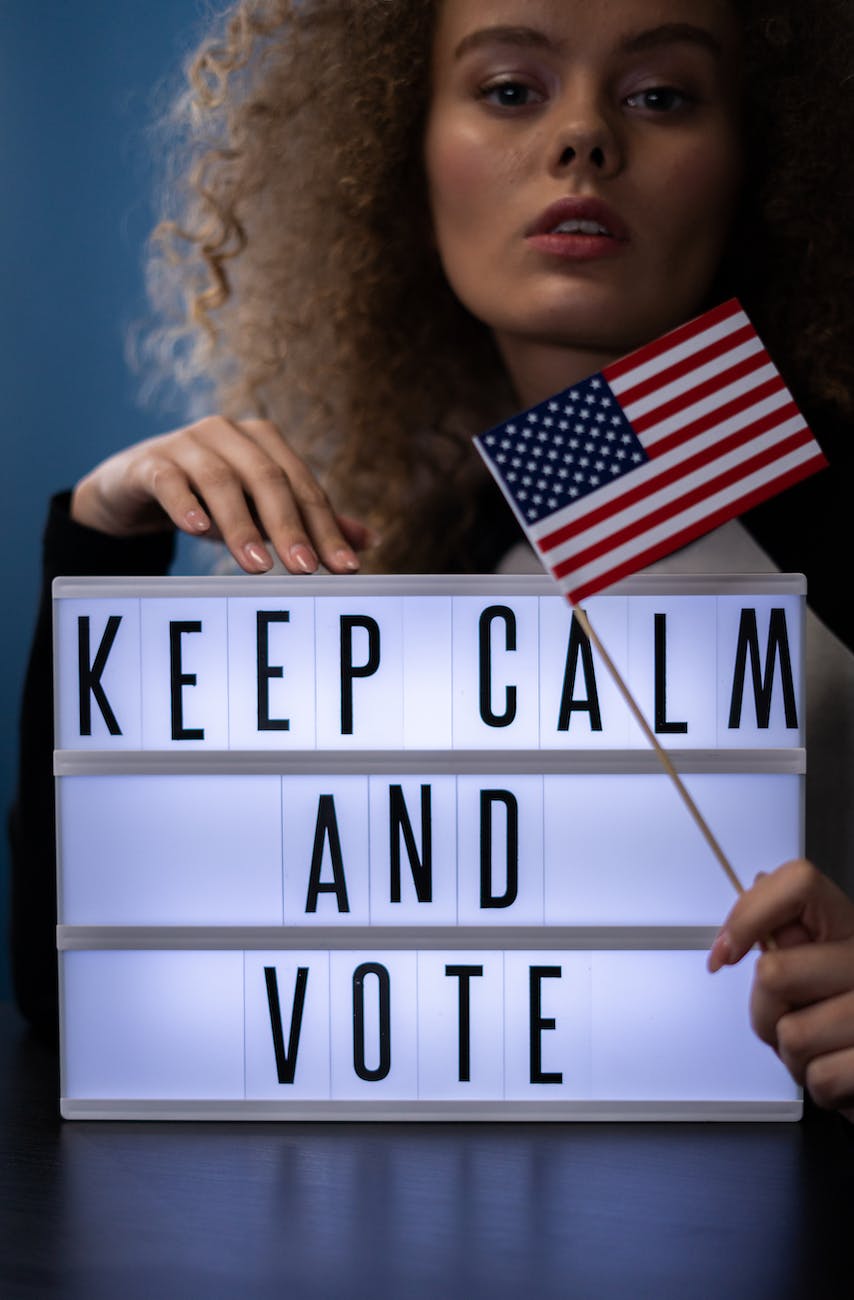
I know how to survive bullies. I am not worried for myself. I watch my country try to survive the bullies, those they eat dinner with at their private clubs who are shocked by what they see…what the oppressed have always seen. Yet, they stay silent or act entertained. Or worse yet, they choose to ignore what they have not wanted to notice. It is my countrymen whom I hope will uphold its constitution, its citizens I hope will stand up to bullies and vote them out of office before it is too late. The power of bullies’ wealth can be overcome by our numbers, if we vote. That is a big if. Mobilize, register, transport and assist voters to the polls. Write Letters to the Editors. Speak out on social media to friends and family. Meet your neighbors and recruit their support for the efforts it will take to stay the course of a democratic republic. I do not understand the hate. I never will. It does not matter. What matters is I will not allow hate to rule my country, nor anyone in it. I choose love, a love embodied in a country which puts no man above the law, and believes all men are created equal, with unalienable rights. I took an oath to uphold the constitution. I took an oath to love.
Leave a comment
Filed under COMMENTARY, POLITICS
Tagged as Biden, bullying, christ, courts, electtions, hate, immigration, Jesus, law, love, ove, racism, religious intolerance, Republican Party, sexism, trump