Category Archives: COMMENTARY

There is No War on Women,by Louise Annarino,1-25-2014

There is No War on Women,By Louise Annarino


There is no war on women. What we are watching play out is an age-old phenomenon of men who fear women’s sexual expression. Whether it is the Taliban, fundamentalist Muslims-Jews-Christians,or Mike Huckabee, the chastisement and need to control women springs from men’s fear of loss of their own control. I refuse to allow their fear to become my burden. I suggest they learn to handle it all, as I must handle my own fears. Their fear, their loss of control, is not my problem; but, they insist on making it so. I don’t call that a war. I call it fear mongering.


We use the word war too loosely. We enjoy hyperbole because it grabs our attention,holds our imagination, and allows us to believe we are heroes(another word used too loosely)fighting some grand battle. Anyone who has ever experienced war is insulted by this cavalier use of the word. Anyone who have ever acted heroically is appalled by its frequent use in today’s lexicon. As William Tecumseh Sherman who marched on Atlanta destroying all in his wake said in his address to the Michigan Military Academy in June 19, 1879, “You don’t know the horrible aspects of war. I’ve been through two wars and I know. I’ve seen cities and homes in ashes. I’ve seen thousands of men lying on the ground, their dead faces looking up at the skies. I tell you, war is Hell!” (Battle Creek Enquirer and News,Nov.18,1933). I cannot use the word “war” to describe anything but war. Fear is not war; and, unless we name what is happening correctly, we cannot address the problem we face correctly.


This fear of male loss of control when faced with female sexual expression has biological roots. http://www.webmd.com/balance/features/how-male-female-brains-differ Men’s brains are structured with less ability to maintain rational thought while in the throes of emotion. Of course they fear women whose brains allow them to cry,laugh,orgasm and think at the same time. Whom should we blame for this? The Hebrews tell a story of the first man and woman, Adam and Eve, in the Garden of Eden. Most of us have at least heard that story a time or two. There are two elements to that story: obedience to the male deity transferred to obedience to the first male, Adam. Who was to be obedient to these male prototypes? The woman. What do fig leaves have to do with the story? They are used to cover up human sexual expression, and thus control sexual expression which becomes sinful when the woman does not obey the man. That is what is going on today!


The Hebrews were not the first to tell such a story. Earlier cultures and religious traditions acknowledged the power of female sexuality; some accepted it and used it as an avenue to spiritual awakening a la the Vestal Virgins. Others fearfully suppressed it, a la female genital mutilation. We see vestiges of these practices today throughout our world. It is not only Mike Huckabee and Republican men who fear women. Democrats,Libertarians,Independents and a host of other men do, too. The men who do not fear women are able to trust and appreciate women, able to understand the biology of male/female differences without feeling inferior, and able to see diversity as an enriching experience,not one to be feared. There is that word “diversity” which too many of us fear. Such men exist within all political parties and religions.


Although I do not see such fear of women as merely a Republican issue, one must acknowledge that the Republican Party platforms have opposed Affirmative Action,our ONE effort to practice diversity; while the Democratic Party platform has embraced diversity.The Republican Party platform opposes women’s right to birth control and abortion,to freely manage her health needs to freely express her body’s sexuality; while the Democratic Party has embraced a woman’s right to choose how she uses her body sexually and how to protect her health. We cannot ignore that these two party positions are different, even though men are the same biological creatures, dealing with the same fears in both parties.


As a woman,I am not satisfied with the behavior of men in either party. It is not enough to add women to the mix, when the men make all the final decisions, and too often ignore and disparage our female voices. When women’s only strength comes from a separate women’s caucus, whose leaders are the strongest and wisest and most experienced political activists I know, rather than being hired into positions of political power we know we still have a long way to go. We may have “come a long way baby”,finally being allowed to participate in the race; but, the race officials-funders-judges are still men who too often control our political expression. The words men use to describe their view of women is not the problem. Their fear of women’s full and free use of her power is the problem. Huckabee apologists are busy trying to reframe how to control women as if male manners need fixed. Instead, they should focus on facing their own fears and finding their courage in the face of female power and sexuality.


Leave a comment

Filed under COMMENTARY, POLITICS

Ohio Winters, by Louise Annarino, January 18,2014

When I first moved from Columbus to S.E. Ohio I was entranced by the feel of wilderness encroaching the city limits. I moved into a solar home, newly built into the side of a hill, off a backwoods area dirt road north of Pomeroy. I soon learned that half-hour drives to work in a metro area differed greatly from a half-hour drives to work in rural Ohio. Logging trucks, escaped cattle, roaming wild pigs, and turkey vultures scavenging road kill delayed the trip considerably; snow and ice even more.


I love Ohio and its winter storms, snow piling in drifts against the door, the clean sunny days which often follow snowstorms. The winter evening I could not drive my car up the gravel driveway to my home and slid from one ditch to another, barely staying on track nearly changed my mind. Realizing the incline was simply too steep for my TC3, I decided to use my neighbors’ driveway which had a more gentle upward slope.  Once I reached the end of their drive, I could try the tractor track which connected our two properties through the woods. It was narrow but passable. It was the track we used to walk the two mile trek between our houses for neighborly visits.


The track was icy but flat; and, the four inches of snow atop the ice allowed for better traction. All went well until my tires became stuck when the ice broke under the car’s weight. Revving into reverse then forward only sank the tires deeper into the mud. I opened the door, stepped out and broke through more ice into a six inch deep mud puddle filled with icy water. My only choice was to hike the next mile home through ice water and mud, never knowing when the snow underfoot would give way. By the time I got home I was a sodden ice cube of muddy woman. The tears from my laughter over such a ridiculous effort had frozen on my cheeks. I smiled all through the hot shower and hot cocoa afterwards, tucked up under a warm blanket before the calming fire in my Jotul wood stove.


Eventually, I called for help. A tractor would come the next afternoon to pull out my car. I had time to reconsider my love of Ohio winters, since I could not get to work the next day. I decided I still loved them as I watched the snow continue to drift and blow. It was magical. Snow covered every muddy hole, every piece of thin ice, every mistake of human nature, every stupid idea and silly effort to control the natural world. Snow gives us a chance to reconnoiter our personal terrain of mind and soul. It strengthens our will and gladdens our hearts.


I remembered my solo midnight skate on a frozen farm pond near an abandoned homestead down the lane across from my home under a full moon; the feeling of gliding through life with grace and enchantment stirring my senses, a sense of overwhelming peace and safety. I remembered the late night I walked through the woods after a dinner party at my neighbors’ home, a flashlight on high beam held tightfisted until I realized the moon was full and the flashlight was not needed. It was only when I turned it off that the beauty of the night was fully revealed and my hand relaxed. Another walk home through the woods on a cold winter’s night was a walk though a crystal wonderland,every branch and twig of the trees and bushes, and each broken leaf of the ground-cover bathed in frozen ice. The moon broke the ice into rainbows of color and shimmered a stream of beauty with each step I took. A journey which normally took half an hour took two hours as I slowly made my way through a magical kingdom of crystal light. I felt blessed by the greater power of the universe.


Such memories of Ohio’s snow and ice intrude as I make my way down icy streets to the grocery store, inching my way over salt-covered parking lots, picking myself up after my feet slide out from under me on black ice. I still love every minute of winter, still laugh when I fall, still smile when I slow the car to avoid a slide, still sigh when I catch snowflakes on my tongue and still revel in my arrival home to a warm apartment.


My Pomeroy neighbors, Connecticut born and bred, once told me that S.E. Ohio was poor because early settlers who decided to remain in the hills to farm rather than brave the rivers and trails to rich farmland farther west were “lazy, weak and ignorant”,implying their poverty was well-deserved. Since most farming at the earlier time was horse-driven, the hills posed no obstacle to success. It was neither unwise, nor cowardly to make the decision to stay among the beautiful and fertile hills where nature’s magic so easily revealed itself. It was not a lack of courage which held them, but a faith in themselves which did so. It is easy to see now,looking back, that mechanization would destroy their ability to compete using horses because tractors and combines cannot handle steep hillsides; but, less so that corporate farming would supplant the small farmer. It is interesting that small farmers in S.E. Ohio are supplying much of the organic plants, produce and dairy we see in our groceries today. Snowville Creamery is a particularly apt example, and well-named.


We Ohioans love Ohio for many reasons, not the least of which is our cold, icy and snowy winters. We appreciate how our snow season slows life so that we may dream and remember. There are many ways to think about Ohio, about Ohioans, about winter. I happen to believe settlers who chose to remain in Ohio made the right choice, the smart choice, the memorable and magical choice. If too many Ohioans live in poverty it is not from lack of imagination, lack of willingness to work hard, nor lack of courage. It is not a winter of the soul of those in  poverty which we should question; but rather, the winter of the soul’s imagination of those who decide who will be poor while hoarding their own riches, which we should question.

2 Comments

Filed under COMMENTARY

Zimmerman Not Guilty of Murder of Trayvon Martin? Take Off the Hoods,Americans, By Louise Annarino,July 15,2013

Zimmerman Not Guilty of Murder of Trayvon Martin? Take Off The Hoods,Americans! By Louise Annarino,July 15


Used to be the Ku Klux Klan, men…even women… of every education level and background including law enforcement, donned white robes and hoods to protect their identity and hide their shame. Their stated purpose was to meet out justice to African-Americans who had crossed over a boundary; and,in some way failed to acknowledge the superiority and power of the white community.  Perhaps, a 14 year old African-American boy smiled at a white married woman as he entered her small grocery http://www.pbs.org/wgbh/amex/till/ . Perhaps a 37 year old African-American father of three children spent his days registering voters and seeking the end of Jim Crow laws as a  N.A.A.C.P field organizer http://www.history.com/news/7-things-you-should-know-about-medgar-evers.


The murders of Emmet Till and Medgar Evers are well known, but every African-American, boys and men in particular, endure retaliatory acts based on racial bias and racial animus every day. They are familiar with expressions of bigotry and punishment justified by white fear. The white robes are gone now,replaced by an unreasonable white fear instututionalized in the law, and unquestioned by the white media.


Attorneys on each side of the George Zimmerman murder trial scrupulously avoided the racial motivation for the murder. The judge ordered the phrase “racial profiling” not be used. White “legal experts” on every channel affirmed this approach, as that required by a unbiased court. They are all wrong. The only way the court could have been free of bias would have been to acknowledge the racial bias underlying the case.  Lady Justice is blindfolded but she is not stupid. She must not pretend race is not a motivation to kill. Our history clearly tells us otherwise. She need not play the fool; unless, she fears her power and authority can be used to empower scary African-American boys and men.


I expected the defense team to provide a strong defense woven into a story of why it was reasonable for a fully-grown man,trained in martial arts and armed with a gun, to fear a 17 year old African-American boy on his way home from a “munchies-run”. I expected the defense team to discount the boy’s right to defend himself from the attack his cultural history and his phone friend warned him to expect from his silent stalker. And,I expected the defense team to turn Trayvon’s self-defense into the justification of Zimmerman’s fear.


I naively did not expect the prosecution team to ignore racial bias.  Special Prosecutor Angela Corey stated “This case has never been about race or the right to bear arms. We believe this case all along was about boundaries, and George Zimmerman exceeded those boundaries.”  http://www.csmonitor.com/USA/Justice/2013/0714/Zimmerman-not-guilty-Victory-for-new-kind-of-civil-rights-era The prosecution was eager to talk about boundaries,a euphemism for racial animus. But of course, we refuse to admit the existence of racial bigotry. We refuse even when we are charged to seek justice for the murder of an African-American teenager who did NOTHING wrong;certainly,nothing to explain the irrational or unreasonable fear proclaimed by Zimmerman’s attorneys. The prosecution failed to admit race drove motivation until the last minutes of the trial. It allowed the defense to hide race under the hood,as many of us do when we face racial animus. What we fear is not African-Americans.What we fear is our own racism.


Now, the “legal experts” are proclaiming it is impossible to prove racial animus led to Trayvon’s death. The only reason they make this claim is beacuse they cannot comprehend, or refuse to acknowledge, the continuing and historical irrationality of white fear. No one who is willing to admit this “fear turned to hate” is hogwash believes the DOJ cannot find such a connection. On THE VIEW today,the “legal expert” Dan Abrams responded to factually-based questions and comments by Whoopi Goldberg and Sherri Shepherd by dismissing their comments as “emotional’. While they clearly felt emotional, their comments were no less rational this his own. In fact, they were more so http://abc.go.com/shows/the-view/blogs/hot-topics/george-zimmerman-verdict.


The lack of racial intelligence among our legal experts, prosecutors,defense attorneys,judges, media pundits and manyof us white Americans is institutionalized. This must change. twe must do all we can to raise our racial I.Q. We no longer wear physical hoods over our heads to hide our identity and our shame. We wear figurative hoods of ignorance over our heads to pretend we have no reason to feel shame. Take off the hoods,America! We cannot change what we refuse to face…our selves.


1 Comment

Filed under COMMENTARY

Justice and Mercy,by Louise Annarino,March 20,2013

Justice and Mercy, By Louise Annarino,March 20,2013


Two words seem to define the response to the rape of a teen-age girl by teen-age boys in Steubenville,Ohio: fear and loathing. I am aware of the crime itself and the ancillary threats,denials,cover-ups,and diverse opinions expressed by the public and news media.I heard the apologies of those convicted and the statement made by the victim’s mother. The hate expressed against the rape victim and her defenders, and that expressed against the perpetrators and their defenders leave me saddened and dismayed. Having experienced sexual assault as a young woman, and lived with nightmares and flashbacks since, my heart bleeds for the victim in this case and for all women. We women face objectification and sexism daily. However,I suggest we put aside our fear and loathing and reflect upon two other words: justice and mercy.


Blindfolded Lady Law holds a set of scales,but not merely to weigh evidence. Those two plates on the scale also represent justice and mercy. When judges apply the law they must provide justice for all parties, and mercy for all parties.


As a prison social worker I worked with inmates who had committed truly heinous crimes,and some less appalling. By serving a sentence of incarceration justice was served. By participating in rehabilitation,mercy was applied. As a social worker,I sought to balance the two, as Lady Justice personifies. When I later became an attorney, I continued to seek justice and mercy for my clients. Only when justice is balanced with mercy do we create peace,for each victim, for each perpetrator, and for our entire community.


It is impossible to overestimate the value of balance. After any sports injury, surgery or illness; when planting a garden or teaching new ideas; while painting a picture or building a fence, the first thing one does is find and then maintain balance. Whether working to create a just society, a rehabilitation program,or a federal budget we must strive for balance. Justice and mercy. Both are essential.


All boys and young men,all girls and young women are in desperate need of our protection and guidance. We cannot expect a child born in poverty, or awash in the acid drip of discrimination,or subject to the benign neglect of overworked parents to stand strong against the sexually derogatory messages  in their dress-language-social media-music-movies-television-gaming. We think because boys and girls talk,dress and act out adult behavior that they are mature. They are still children. They make stupid and harmful decisions. This fact is more readily acknowledged for boys who are white, athletes or scholars than boys who are sagging and hanging on a corner. Too often our latent racism blinds our reality. Boys carrying guns in gangs are still boys. Girls exploring their sexuality are still girls. How can we expect our children to show self-respect when we adults show them so little respect?


Decisions made by boys and girls have consequences; often,adult consequences. Facing the consequences of one’s actions is just. Caring for those facing consequences they never imagined in their young minds and hearts is merciful. Mercy does not condone sexually objectifying girls and women; but, it may provide a means to address the problem. Let us respect our children by paying attention to their needs, and being willing to pay the cost. How can we expect our children to deny their self-gratification when we are unwilling to sacrifice our own?


Leave a comment

Filed under COMMENTARY

Will Tribalism Trump Citizenship?

Will Tribalism Trump Citizenship? By Louise Annarino,2-22-2013


My Mother’s side of the family is planning our first ever family reunion. That this is happening during a time when I am wrestling with the differences between being part of a tribe or being a citizen of a nation indicates the synchronicity which operates throughout the multiverse. What does it mean to be part of a tribe? What does it mean to be a citizen?


My first struggle for identity was between two tribes: my Father’s and my Mother’s. Was I Sicilian like Dad; or,Napolitan like Mom? “Half and half” Mom explained. In our house we referrred to two other larger tribes: our paisans (which included Siciliani,Calabrese, and Napolitani etc.) or “the Americans”.


The American tribe seemed stranger to me than the paisan tribe, and trying to fit into that tribe was quite confusing. For example, when visiting Americani one had to wait one’s turn to speak,slowing down conversation, but creating time for reflection. Portion sizes were miniscule at meals. I once had dinner at the home of a school chum and each person was allotted 1/2 a pork chop. I was starving when I got home and dug out the cold lasagna,because of course we always had left-overs in our over-stuffed fridge. But, my friend’s family had money to attend the symphony,go to the art museum and attend ballet. Mom could sing an aria as well as Maria Callas, or a pop ballad as well as Frank,and we danced around the kitchen together every day. She had won a jitterbug contest at radio City Music Hall at age 16 and music and dance filled our home. Each tribe had a lot to offer and I understood adhering to tribal dictates would have been a mistake.


I did not like the sound of English.Italian was much more musical and passionate in its delivery,using hand movements to extend and deepen meaning.English seemed drab. When I asked my Mother to teach me Italian and speak it more often so I could understand the adult conversations of my older extended family better she offered my first instruction in the difference between tribalism and citizenship when she stated, “You are an American now. You will speak English and learn to be an American. I will not teach you Italian.It will not help you become an American;it will only hold you back.”


When I responded that maybe I did not want to be an American she strongly set me straight. “It is America which protects us and gives us a chance to have a decent life, and to live in peace and prosperity.” As a woman particularly, she warned me that I should be greatful to be an American. “It is not so easy to be an Italian woman,” she explained. We are lucky to be Americans and living in the best country on earth. Italy was the “old country”;America is our country now. At Thanksgiving, Mom cooked turkey with all the trimmings, plus antipasto, lasagna and garlic bread. At Christmas and Easter we ate ham plus ravioli. Tribally, we were both Sicilian and Napolitan,both Italian and American. As citizens we were all-American.


When I listen to fundamentalist,tea-party,NRA furor I hear tribalism trumping citizenship. When I read about the Taliban, AlQuaeda in the Magreb and other such groups I see tribalism trumping citizenship.Tribalism is a threat to peace, and must be kept in check. The Soviet Union was an horrific and failed effort to reduce tribalism. The United States of America is the wondrous and best example of a successful effort to reduce tribalism. How do we do so? Through our Bill of Rights which covers every single citizen,even though we are still trying to make that a reality in fact.


We end tribalism through citizenship. The nation becomes larger and more meaningful to a citizen whose rights and freedoms are protected and preserved, than his allegiance to a tribe, especially one which tramples upon human rights and fails to protect the human rights of every member of the tribe. This is why the Soviet-Union failed, why Al Quaeda will fail, why any tribe seeking to assert its authority over a nation instead of under a nation is doomed to fail.


Which brings me to immigration reform. We must never approve an immigration policy which focuses on controlling tribes and creating an underclass through work visas, or one which allows women to be denied full freedom. The centerpiece of any sound immigration policy must be a path to citizenship. Do we really want to allow various tribes to live within our borders without citizenship? Do we understand that this would endanger our democracy?


This is a real danger. Tribalism is a threat to those outside the tribe,and often to those within the tribe. The only reason America has been able to peaceably self-govern and overcome the tidal wave of tribes,with all their differences, is through offering full citizenship to those willing to pledge allegiance to our constitution and to our Bill of Rights, which often flies in the face of the tribe’s belief system. For example,The Violence Against Women Act is being opposed by Republicans in part because it affords protection against violence for immigrant women. Do we understand the tribalism which perpetrates such violence, under a veil or not? Do we understand the tribalism among some Republicans which would deny a human right to a woman outside the American tribe? Tribalism is a threat both from tribal Americans and from tribal immigrants.


Citizenship carries rights and privileges, but it also demands allegiance to an enlightened set of principles laid out in our Constitution and Bill of Rights. We can’t have one without the other.Those who would zealously guard such principles, must also demand such allegiance.However, if they do not offer the rights of citizenship, they cannot demand allegiance to America. For over 200 years we have not invited tribes to settle here;we have invited citizens to settle here. That has kept us safe.That has kept us free.


We cannot understand the importance of immigration policy unless we understand the difference between tribalism and citizenship.

2 Comments

Filed under COMMENTARY, POLITICS

Running To Catch Up,Louise Annarino,5-29-2012

RUNNING TO CATCH UP

ImageLouise Annarino

May 29, 2012

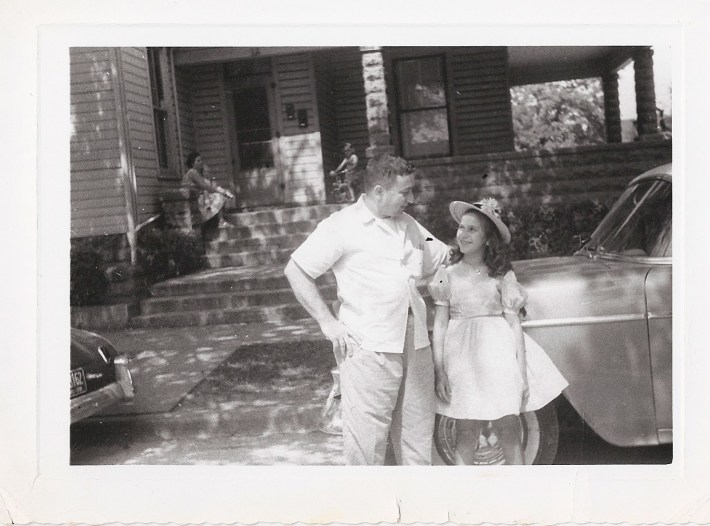
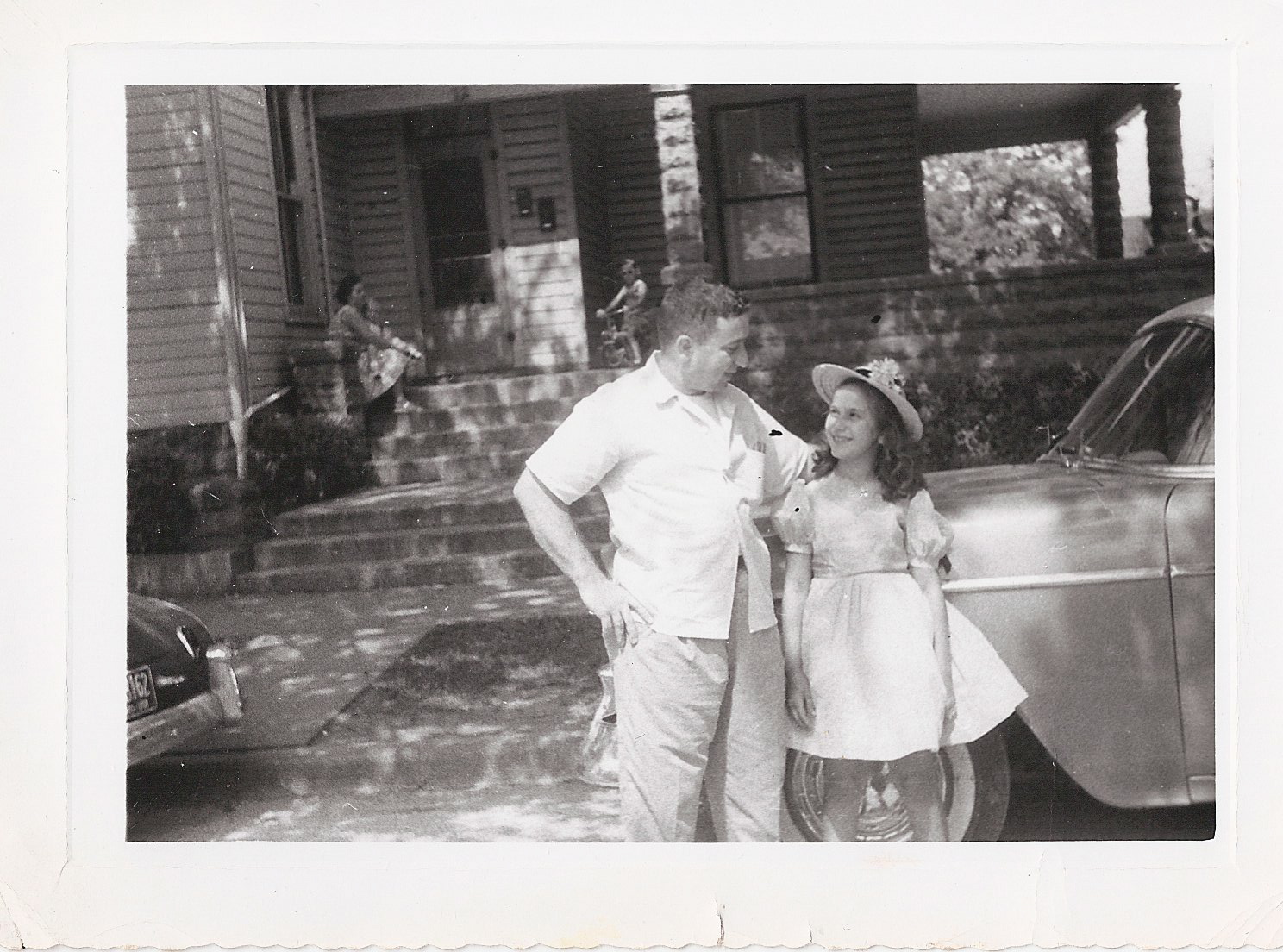
My first memories of my father are the most precious, foreshadowing our life-long relationship. My five feet four inch giant, happy-go-lucky father would scoop me up with both arms, lift me high with legs dangling, then tuck me into the crook of his right arm, both of us chuckling madly at our good fortune. I was just learning to toddle and could not keep up with my parents and three year old brother whose hand Mom kept in a firm grasp. As I got a older, it was Dad who held my hand, as Mom gripped the hands of both my older and younger brothers. They seemed a world apart from me and Dad. While Mom was intent on teaching the boys to walk like little gentlemen at her side, Dad and I were off on a merry jaunt.

While Dad loped along with an easy gait, my short legs scissored so fast to keep the pace I would trip. Up I went into Dad’s arms. He never slowed down, nor stopped grinning at me as if we held some grand secret, even as Mom chided him to slow down and let me walk! I can still see his discomfort trying to arrange the frilly dress and crinolines layered over his arm, while Mom rolled her eyes at him. He loved to make Mom roll her eyes. He would reward her with a kiss and a laugh.

Dad’s cousins had warned her before they married “Angelo is ornery.” Mom liked ornery. We all liked ornery. Dad worked long hours with his brothers John, Joe, and Frank and cousin Johnny “Dayton” running an Italian-American restaurant. Every other week, it was his turn to be home between 5 and 7 pm before returning to stay later to close. That meant we could have our supper all together.  We would fight over who got to sit next to Dad. Mom joked, only because she knew we could never afford a new one,she would soon buy a table with a hole in the center for Dad to sit in so we would each be near him.

Dad could draw the best cartoons and funny pictures, but he could not spell worth a darn. His notes to school would read, “please excuse Lousie from class as she had a sure throat and we had to keep her home.” “Lousie? Dad, you called me lousie! Sure throat?” I would protest. “Sister knows who you are,”answered Dad. “Don’t worry. Nobody’s perfect. It will give her a good laugh! She needs one.” She did. Most teaching sisters did need a good laugh. Most Moms, too. Dad kept them all laughing.

Mom could never threaten us with “Wait ‘til your Dad gets home.” Dad usually thought our daily shenanigans great fun. He would try very hard to keep a straight face as he berated us for some activity my Mother thought out of bounds. Then he would relate some of the trouble he got himself into as a kid, “one-upping” us every time.No one held their breath over Dad’s discipline.

It was Mom who chased us through the house with a wooden spoon to smack our behinds. She could not run very fast, she seldom got close enough to connect spoon to backside. Her aim was awful, too! Faking her frustration at her failure to get us, she would crack that spoon over the telephone bench so hard it broke in half. “Next time,” she would threaten, “when I buy a stronger spoon!” It took years, and many broken spoons, to realize Mom had had no intention of catching us.

The only time silence and tears welled up in us over Dad’s discipline style was when he took off his belt and ordered my older brother into the bathroom for a whipping, with Mom’s full support. I remember sitting at the table, looking at the faces of my younger brothers, our eyes open wide in fear, as the sound of the belt connecting was followed by Angelo,Jr.‘s tearful screams. As both Angelos rejoined a now solemn group of children at the table, my brother would be wiping the moisture from his face, his and dad’s eyes downcast, faces blushed in humiliation. We were the best-behaved kids on the block for at least the next twenty-four hours, an eternity to us.

It was not until one Thanksgiving at that same table, thirty years later that we learned the dirty little secret about Dad and Angelo. Taking his tight belt off so he could eat a second helping of Mom’s lasagna (yes,we had turkey and lasagna),we started a discussion about other instances where Dad had to take off his belt. The Angelos finally confessed that Dad would hit the clothes hamper with his belt instructing Angelo to fake screams. Before leaving the bathroom, Angelo would splash water on his face to create false tears. Both kept their eyes downcast when they rejoined the table to stop the laughter they each held back, blushing with the effort. All those years we had wondered why only Angelo ever got the belt.

Mrs. Rowe lived on the huge lot behind us which stretched from the side street all the way to the alley. Neighborhood kids played baseball there until she called “Kreager”, the truant officer, to report our trespassing. Kreager would tell Dad, stopping in for a drink at the restaurant before he headed down to the south-end to clear us out, so Mom could get everyone out of Mrs. Rowe’s yard before Kreager showed up. This seemed to make everyone happy for the moment and no one had to worry about going to juvenile hall for playing baseball in Mrs. Rowe’s yard. I once hid in the bushes along the alley edging her property and overheard Mrs. Rowe chastise him for being so slow in responding to her calls. She desperately wanted him to catch the “juvenile delinquents” in the act. Kreager answered her that she should be glad we wanted to play in her yard. Our poor neighborhood had no playgrounds, no place for kids to be kids. She should “do her part” and let us have a place to play so we did “not become juvenile delinquents,” he told her. In such overheard conversations are great truths revealed to children.

Mrs. Rowe had an ancient and fertile apple tree in her yard, just over the wall between us but not within reach of our short arms. The tree produced sweet,firm yellow-green apples on limbs far above our heads. The ground apples were fine for Mom to make applesauce, but not for eating. We stood slightly out from under the tree hurling the fallen apples, knocking the good apples to the ground where we would gather them up. Mrs. Rowe was no happier with chucking apple-pickers than with ball players. She informed us “I don’t want you kids in my yard knocking apples out of the tree. You can have any apple you find on the ground, but do not stand in my yard and throw apples at the tree.” This was no bother for Mom but left us dissatisfied until we got the bright idea to use the clothes-line pole to extend our reach.

We still had to find a way to reach those apples without standing in Mrs. Rowe’s yard, focusing on the stand in my yard part of her reproach. So, I stood on our wall and swung the pole out toward the tree, while my brothers waited below. Swinging the pole didn’t knock down a single apple but invariably knocked me off the wall. We gave up. The boys went off to play near the railroad tracks.

I went inside surprised to find Dad asleep in his chair on a rare afternoon break, while Mom fixed dinner. I awoke Dad and asked for his help outside. He came without question, still half-asleep. I placed him on the wall and handed him the pole, instructing him to start swinging the pole at the apple tree as soon as I climbed over the wall into Mrs. Rowe’s yard. I forgot to tell him about listening for the squeaky door hinge which would tip him off that Mrs. Rowe was about to discover us. That loud hinge gave me just enough time to hide in the bushes. Thus, when Mrs. Rowe came around the corner off her porch all she found was Dad, standing on the wall, swinging the laundry pole, apples flying out of her tree. “Mr. Annarino! No wonder your children are such delinquents. Shame on you.”

I waited until Mom called us all in for dinner, expecting a stern lecture or worse from Dad. Instead, as soon as he saw me Dad started laughing out loud asking, “Where on earth did you get to so fast? How did you know to run?” He thought it one of my best pranks, ever.  But, he admonished, it was one we could never repeat. With Dad,everything that happened in life was a cause for joy; and,learning life’s lessons was always fun.

Dad, Mom, Mr.Kreager, Mrs. Rowe – each of them so far ahead of us, with so much to teach us simply by being themselves. Each of them loving us and expecting us to grow into respectful and respected adults. But, it is Dad’s lessons and laughter I hold dearest. His ability to see the absurdity of rules, his ability to avoid the ordinariness of daily living by adding his own creative spark, his willingness to risk the haughty stares of others for a bit of good fun made every day a delight for us. We had no wealth, but we ate well. We never took vacations, but were always on vacation from disquiet and poverty. We worked hard within the harsh reality of the working poor, but we laughed harder than the seriously wealthy. Dad was a man on the go his entire life. He has been gone over 12 years. I am still running to catch up.

Leave a comment

Filed under COMMENTARY, FAMILY STORIES

WHAT ONE DADDY TAUGHT HIS LITTLE GIRL,Louise Annarino,1-18-2013

WHAT ONE DADDY TAUGHT HIS LITTLE GIRL,Louise Annarino


My daddy’s name was Angelo. He grew up without a Father to show him how to be a dad. His dad was a  skirt-chaser who left his wife alone to raise their four sons. Angelo was the baby. At age 3, when he lay on the sofa, dying from rheumatic fever which damaged his heart, the doctor went to his father to tell him so he could go visit his son and comfort his wife. Angelo’s father never showed up; not that day, and not until Angelo who was stronger than anyone could guess and thus survived, was in high school and old enough to help his father work his produce stand in the old Market Canal warehouse. Angelo cleaned the celery in buckets of ice water. His hands grew colder than the ice. But, his heart, his damaged heart, was always warm; especially for his little girl.


I was told that Daddy’s buttons popped off his shirt when his second child was born. Angelo was present in the room when I emerged from my Mother’s womb and he heard the doctor say, “You have a baby girl.” He had always wanted a sister and cherished the role of being a father to a little girl, and was thrilled  his sons (he would have three sons) would have a sister. He had done something his father had been unable to do. As a teenager, Angelo had discovered his father had secretly sired a daughter with one of his paramours, but Angelo never knew this sister. Angelo did many things his father had been unable, or unwilling, to do. The most important ?  He loved his children and was ever-present to them; an amazing feat for a man who worked 16 hour days, six days a week.


Daddy and his four brothers, one cousin, one retired uncle, and Angelo’s best friend ran an Italian-American family restaurant. At first, Mom did all the baking, and made pizzas. After I was born she stayed home to take care of my older brother and the brothers who came after me. Dad may not have been home much, but I always knew where to find him. Not once did I feel I had interrupted him. My presence in the restaurant was never questioned. I was as much at home there as in my own living room. Being where Dad was ? That was being “at home”.


These are things my daddy taught me:


  1. Being hugged, held and comforted can make the most difficult situation bearable. It takes away pain and builds one’s strength to allow others to offer comfort. I recall a day my mother had had enough of motherhood, and especially enough of me. Caring for a 3 year old son and a 1 year old daughter had taken its toll on her. She called my dad home from work to help her. When he arrived she told him “Take this child out of here ! I can’t do this today !” Daddy reached down and pulled me into his arms, cuddling me close and humming a sweet buzz in my ear as I hiccuped my cries. I felt his big thumb gently catch a huge tear sliding down my cheek. I looked into his eyes which were smiling at my own. I stopped crying. Daddy took me out and we went for a drive, giving Mom some time alone to calm herself and have a cup of tea while my brother napped. I never napped. While that was probably the real issue, I felt I was the issue. I often felt rejected by my mother. But, my father never rejected me. When I wet my bed at night and crawled over my mother to fit my wet-pajama self in between them, it was Daddy who soothed me and changed my sheets while Mom complained at the extra laundry I was creating for her. Daddy taught me that rejection by others, and their complaints about me, had more to do with their own needs than with me. He soothed my mother and he soothed me; blaming neither one of us. His compassionate understanding of human nature was one of Daddy’s greatest gifts to me.


  1. Money alone does not solve the problem of poverty. Daddy always  took me with him when he collected rent from Grandpa’s renters who lived on an alley near the railroad tracks downtown. We also rented a house from my Grandpa a few blocks away; but, ours was shingled and well-kept. This house was a run-down unpainted shack. Daddy took me because the renters had several small children, including a little girl my age. While he went inside to collect whatever rent he could, I played with the children in the front yard. Often, Daddy paid part of their rent rather than tell Grandpa they could not pay. He told me not to tell anyone. He explained that the people were doing the best they could do and he did not want the family to suffer. His job, he explained, was to help the parents relax and feel safe. My job was to help the children relax and feel safe. Being poor, he knew from experience, made children worry and feel scared all the time. Helping with money for rent was not enough; we needed to show people they could feel safe enough with us to enjoy life. His passion for life’s joys was something to share with everyone, even those who otherwise could not afford to simply enjoy life. His passion for helping others to enjoy life was one of Daddy’s greatest gifts to me.


  1. Girls have the same rights as boys. Every summer we went to Staten Island to visit with my mom’s sister Millie. Daddy drove us there and weeks later he returned to pick us up. He only stayed a few days before driving back. My Uncle Sal loved to go “crabbing”. What seafood feasts we had. One evening I overheard him and Daddy talking about what time Aunt Millie had to wake them and the kids, so they could string the cages and place them on the outgoing tidal floor. I was ecstatic to be able to join in. When I climbed in bed early so I was sure I could get up at 3 am, Uncle Sal informed me I was mistaken. “Only boys can come; it is no place for girls,” he stated. Crestfallen, I implored my Dad to let me go. My Dad who always included me when he pitched balls to the boys, taught us all how to block a tackle, connect with a boxing bag, and bait a hook would certainly allow me to go crabbing, too. He took one long look at me and calmly told Uncle Sal, “If my daughter cannot go, neither can I, nor my sons.” That is all it took. A willingness to make sacrifices so that everyone can be included in life’s opportunities was one of Daddy’s greatest gifts to me.


  1. It is not how one looks or dresses which makes a girl feel beautiful; it is how one is honored and cherished which makes her feel beautiful. And, being cherished is what every girl deserves. I started dancing school at age two. Every monday and wednesday evening and several hours every saturday until I was fourteen,  I was practicing at Marjorie Pickerell’s Dance Studio, a few blocks around the town square from my dad’s restaurant. After lessons I walked over to eat my dinner and Daddy would drive me home. He could never take off work for my recitals since they occurred during the busiest part of his work day.  But, he came to a recital once, at the close of my routine, which was the close of the recital. That year the recital theme was “The Wedding”. I danced as the bride; the wedding was the final number. I wore my frilly white First Communion dress and veil as my wedding costume. But it was not the dress that made me feel beautiful; it was Daddy. My partner groom and I had just left the stage to applause, when Marjorie ushered me back out onto the stage to take an encore bow. There, at the base of the stage, between the footlights which blocked out all the audience but allowed me to see him was the man who cherished me. Still dressed in his standard black pants, white shirt, and stained full-length white apron stood my Daddy with a huge bridal bouquet which he presented to me as though I were the world’s greatest ballerina, to much audience laughter and applause. He had only seen me dance in his mind’s eye, but what he saw was beautiful. And so, I was. Giving me a sense of my own beauty was one of Daddy’s greatest gifts to me.


  1. Racism was omni-present in my world. It was something I knew I had to stop. As a second generation Italian-American I grew up hearing stories of prejudice endured by my family and friends. However, our ordeal was minor compared to what I saw African-Americans endure. I was incensed by the fact that there seemed no escape for them, as there was for me. When I read about apartheid I was stunned that our government continued to do business with South Africa and Rhodesia. “Then, do something about it”, Daddy entreated me. “I’m only 10 years old,” I argued. His close childhood friend, Republican John Ashbrook had been elected a congressman and Daddy suggested I meet with him when he came home for constituent meetings. On a saturday morning I climbed into a chair meant for an adult, and asked Congressman Ashbrook sitting at his desk in the Licking County courthouse how he could justify his recent vote to buy chromium from Rhodesia when that government continued its policy of apartheid. We discussed the Rhodesian issue and the issue of American racism at length. From then on, Congressman Ashbrook and I began a lifelong correspondence. He sent me copies from the congressional record of any reference to racial issues at home and abroad. The complexity of issues and the detailed efforts to chart a corrective course through the halls of congress became clear to me. Although I remain a liberal and Mr. Ashbrook was a strong conservative we were able to reach consensus on many issues. That is what Daddy wanted me to learn. Life is difficult. Problems are thorny. Nothing is perfect. But, we must make every effort to change our world for the better and we can only do so by engaging those with whom we disagree. It is easy to complain among our friends; but, hard to solve problems with those with whom we disagree. Showing me that no matter what my limitations, I must do my very best to resolve problems, going as far as possible no matter how foolish I felt, was one of Daddy’s greatest gifts to me.


  1. After my first year of law school, Congressman John Ashbrook offered me a summer internship in Washington, D.C. I was preparing to drive from Cincinnati to D.C. when I got a call from the congressman, “Louise, I am so sorry, but I was at the restaurant last night talking with your Dad and I have to withdraw my offer. You cannot work for me this summer.” It seems Daddy told Mr. Ashbrook that their 40 years of friendship were over unless he withdrew the job. Daddy felt Washington was not a safe place for a young woman, despite Mr. Ashbrook’s assurances he would keep an eye on me. After much wrangling, he gave into Daddy and called me. My faith in all I believed about Daddy was crushed in that single phone call,even as my love for him endured. I could not understand his lack of faith in me. Years later, my youngest brother served as an intern for Congressman Ashbrook for two summers, while he studied law. I asked Daddy why he allowed my brother to go to Washington, but blocked my opportunity. He answered that my brother was more selective than I, more cautious than I and, therefore, less likely to get himself into a situation he could not handle. I, on the other hand, never saw a situation I did not think I could take charge of, was afraid of nothing and no one, and constantly sought out the most difficult challenges – those no one else was willing to take on. And he added, “sexism”. I finally understood that Daddy had not lost faith in me. He knew exactly who I was and felt he needed to protect me; not from Washington, D.C. but from myself. It took courage to do that. He risked my love for him to protect me. I still disagree with his decision because I still think I can handle anything. I have proved my Daddy’s case. Learning to accept who I am, who those I know and love are, warts and all, was one of Daddy’s greatest gifts to me.


My Daddy lives on in my sense of self. His gifts to me are endless. Many little girls are fortunate to have similar stories about their daddies. Too many little girls have no such stories. Let us remember our daddies. And, let us pledge to do all we can to create a community where every little girl can grow up with such daddies. There is much to do. As Daddy would say, “Stop your bellyaching and go do something about it !”


Leave a comment

Filed under COMMENTARY, FAMILY STORIES

The Quietest World War in History,Louise Annarino,1-13-2013

The Quietest World War in History,Louise Annarino,1-13-2013


Drones have enabled the west to fight a world war without its citizens being aware. These unmanned silent ships of surveillance cruise the world directed from afar. U.S. and RAF pilots control these flights from Nevada, except for the initial take-off and landing which are controlled by companion crews where the drones are physically maintained.1

The United States,unlike Britain also uses armed drones to attack targets the drone has isolated; the RAF uses conventional weapons once the drone has isolated a target. U.S. surveillance drones are also used by French forces to guide air attacks. The U.N. relies upon drone surveillance to understand threats to nations around the globe,and make appropriate decisions calling for intervention. Nowhere is this more evident than in the growing threat from Islamist rebels aligned with Al Quaeda in northern Africa known as A.Q.I.M. (Al Qaeda in the Islamic Maghreb), where troops from 15 nation regional block the Economic Community of West African States known as ECOWAS are being trained by the European Union.2

This world war is as different from the Cold War as the Cold War was from WWII,which differed from WWI. But, it is as widespread and threatens the survival of nations, and kills both combatants and civilians. There are at least two notable differences: First,the lack of awareness by citizens of the west that they are engaged in a world war; a war which will not end with the withdrawl of conventional troops from Afghanistan and Iraq. and second, the lack of attention we citizens of the west pay to media accounts.

There is growing concern over the backlash of the use of drones. However, the alternative to the use of drones would be far worse. There would undoubtedly be more civilian deaths,more combat deaths and injuries for soldiers on both sides,more property destruction,higher numbers of refugees,more danger to our troops etc.1 We must question,however,whether this reduced impact of war by the use of drones merely extends its duration by lessening our attention and outrage.

President Obama and Secretary of Defense nominee Chuck Hagel share a world view that war is hell and we only go to war when asolutely necessary. Each seems to  understand far better than we that we are engaged in a different kind of war, a war where acts of terror are the weapon of choice by those bent upon the destruction of western economic,social, and religious dominance. Such a war cannot be fought with conventional methods. President Obama and Chuck Hagel are ready to restructure the Pentagon and the military industrial complex. The military and industrial complex is fighting back. Companies which manufacture conventional weapons fear lost revenues should they be forced to compete with high-tech robotics industries, or re-tool conventional arms to high-tech arms manufacturing plants. It is all about the bottom line for them. It cannot be so for the nation,nor for the security of its citizens.

Our national security depends upon a new methodology,one understood and currently deployed to maximum effect possible by President Obama. It behooves us to pay attention and to understand the need for change he suggests. A smaller overseas military footprint; development of new technology to reduce civilian deaths,increase certainty as to terrorist targets,use of surveillance for broader objectives etc. is our future.3 Beating swords into plowshares must still be our goal;but,how we get to that place is changing. However,we cannot condemn what we do not understand. The silence is deafening and Hagel’s Senate confirmation hearing will be more about protecting the financial interest of private contrators and arms manufacturers than our country. The dones may be silent. We need not be. We must not be.

1.http://www.telegraph.co.uk/news/uknews/defence/9552547/The-air-force-men-who-fly-drones-in-Afghanistan-by-remote-control.html

2.http://www.nytimes.com/2013/01/13/world/africa/french-airstrikes-push-back-islamist-rebels-in-mali.html?nl=todaysheadlines&emc=edit_th_20130113

3.http://www.popsci.com/category/tags/drones

Leave a comment

Filed under COMMENTARY, POLITICS

PROTESTING IDENTITY,by Louise Annarino,1-4-2013

PROTESTING IDENTITY,by Louise Annarino,1-4-2013


In the midst of campus chaos at OSU I went home one week-end. Week-ends are busy for restaurant owners; so, as usual, if I wanted to see my dad I had to go to the Center Cafe. It was usually a rewarding experience to be welcomed by Dad, my uncles and their regulars. Uncle Joe would boom out a hearty, “Hey, it’s my niece. Say hello to her everybody!” Uncle Frankie would quietly grin and ask, “Want  cheese on that body builder?”, as he placed a burger on the grill. Uncle Johnny would uncap a cold coke, fill a glass with ice and pass it across the bar to me with a “Hey kiddo!” Dad would come from behind the bar, give me a kiss on the cheek, motioning me to a booth where we could talk. It was homecoming to my second home.


That Saturday morning, It was not surprising to see a new American flag hanging on the wall of the entrance foyer; there were three equally large flags  hanging above the booths running along the wall across from the grill and bar in the front dining room. Each flag had been flown above the U.S. Capitol and gifted to the brothers by a congressman or senator. What did surprise me was the hand-written sign hanging in the entry foyer “Protesters and hippies will not be served. America! Love it or leave it.”


I stood there a moment wondering what kind of welcome to expect this time. Barefoot, a tie-dyed scarf for a top, cut-off jean shorts with a shredded hem, and a triangled-flag scarf on my head, tied at my nape to hold back, my waist-length hair; I looked a proverbial hippie. I had been protesting the racism,sexism and homophobia on the OSU campus for two years. Now, our protest had merged with anti-war protests across the country, and I was boycotting classes. I came home hoping to find a safe refuge, a peaceful respite from the constant turmoil and endless disputes, from the gassings and shootings.


Pointing out the sign, I asked my uncles, “Are you sure you want to serve me? I am one of those protesters you dislike so much.” They each smiled their crooked smiles, not their usual ear-to-ear grins and said, “Sit down and eat. You look like you are ready to disappear.” In order to love me they refused to see me. I had disappeared the minute I entered the restaurant.

Leave a comment

Filed under COMMENTARY

HEALTHY APPETITES FUEL HEALTHY ECONOMIES,By Louise Annarino,January 2,2013

Healthy Appetites Fuel Healthy Economies, By Louise Annarino, January 2, 2013


Feeling bloated? Too many cookies over the holidays? Made a resolution to lose weight; eat less and exercise more? “Five a day!” “Color your plate!” “Work Those Abs!” “Keep Moving!”  This is nothing new. We have heard it all before.


Sensible weight loss, we are told, involves not severe calorie restriction, but sensible eating. Add more fresh vegetables and fruit. We are warned that if we cut calories too fast, or eat too little our body will believe it is starving and slow its metabolism even more. It will conserve and eventually shut-down its operation of essential functions leading to illness, even death. Anorexia and bulimia are now a routine part of the American lexicon. Our bodies need calories from food to function,survive, and thrive.Only when well-fueled can we keep our bodies moving, healthy and productive


The body politic has the same needs as the human body. Excessive military spending, waging war without raising taxes to pay the billions of dollars war costs, uncontrolled rising costs of medical  care and health insurance premiums increasing medicare costs, and  unregulated securities industry  nearly which nearly destroyed  banking worldwide, have bloated our deficit. The answer,however, is not to become bulimic and purge our government of the taxes needed to fuel government operations. Nor is  the answer anorexic refusal to continue funding programs which would sustain our country’s very survival, and the heath and well-being of our fellow citizens.


The answer is to cut out those foods which are high in calories but low in benefit to the body politic. For example, subsidize green energy and manufacturing to build a competitive economic base and increase exports which would improve the GDP and decrease the trade deficit. And, eliminate oil subsidies for companies which are so bloated by profits they no longer need the subsidy. Also, extend medicare for all; don’t cut it or increase its operational costs. Take the boated profit from health insurers and apply the savings to broader preventive care for the entire population which would reduce costs over time.It would free a company to redirect its profits into wages for employees,rather than funding their health care plans. Pass a transportation bill which would reduce our dependency on oil, rebuild and redesign our transportation infrastructure and connect communities large and small.This would create new jobs, expand the tax base and lower the deficit with greater productivity. Conservatives try to “starve the beast”. We should instead be feeding the body politic. They have it exactly backwards.


The role of a representative government is to secure the safety, productivity and civil rights of its citizens, encourage the productivity and health of the nation itself, and propel the country forward into an unknown future. Both individuals and political bodies must eat wisely but well, stay active and involved in the world, and strengthen their ability to rise to the challenges yet  to come. An anorexic or bulimic government response is no solution to what ails our economy. Government must continue to feed the economy, but do it “smarter” and better as President Obama often reminds us. We and our government should switch from trans-fats to olive oil, but it can’t and it should not eliminate fat altogether. Without some fat, some essential vitamins cannot be stored or used by muscle we need to keep moving.


Fiscal conservatives must not be allowed to label a healthy and well-balanced spending/taxing formula as destructive. To the contrary, it is that balance which will stimulate individuals and government to  greater health and productivity. Those who want to protect their grandchildren’s future would do well to recall what is required to rear healthy and productive children and economies. Want to save your grandchildren? Feed them well, and often. Neither we, nor our government, are beasts.

Leave a comment

Filed under COMMENTARY, POLITICS