

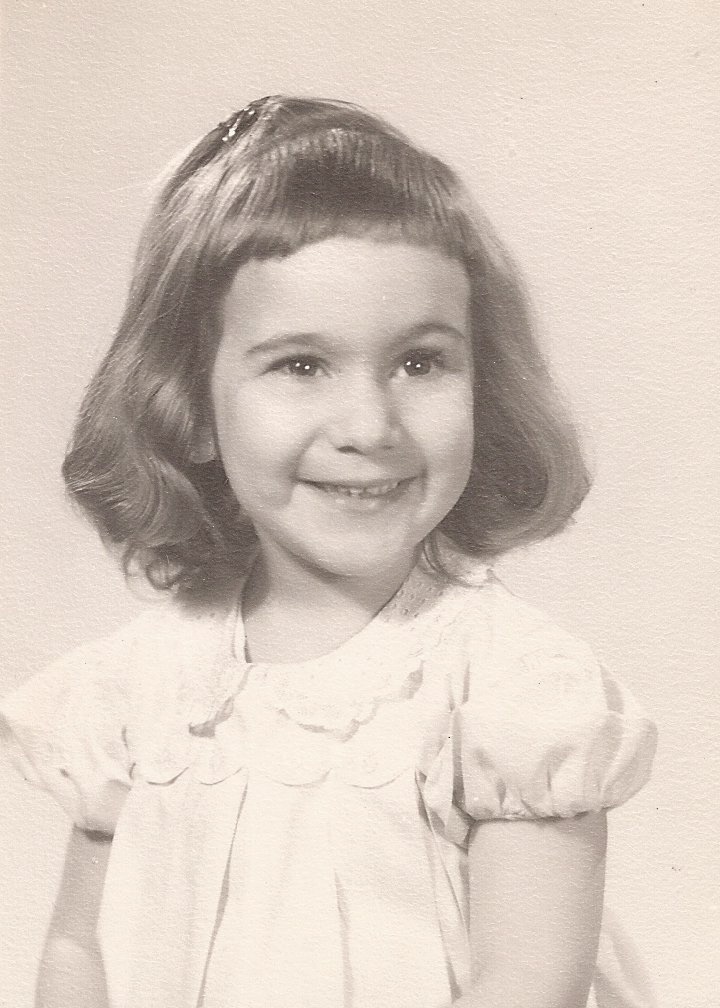
I grew up in an immigrant community in a very poor area of town. Inevitably, the inhabitants who claimed this impoverished neighborhood as their own resented the Italian-Catholics so unlike them. Bullies played a large role in my childhood. They roamed the alleys and streets looking for victims. I refused to become one.
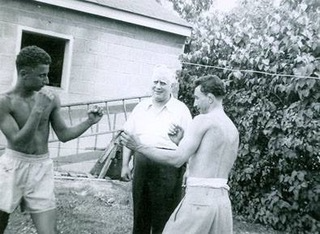
My Great-Uncle George Annarino was a champion Bantam-weight prize fighter. His cauliflower ear was a marvel to me, especially when he explained how he got it as we sat together on bar stools at my family’s restaurant. He had retired from boxing and opened a gym, complete with a boxing ring in his garage, by the time I was born. He had taught my teen-aged father to fight. Dad won his first 22 fights. He lost his 23rd. fight and retired; only to learn that his opponent went on to win a national championship. He chuckled aloud stating to me, “I think I retired too soon.”
Dad hung a boxing bag in our garage, and gave us child-sized regulation boxing gloves. He taught his children how to throw a punch. He provided weights and at the age of ten I could lift 150 pounds above my head. I sparred with my Dad and brothers. Dad thought girls should also know how to protect themselves and showed me how a well-placed jab to the nose or eye, a well-placed kick where it would hurt most could disarm an attacker. We were taught to never start a fight, to walk away if possible. And, we were taught to never take a punch without punching back.
I was a lucky girl of that time in our history, a girl whose Dad knew her worth was equal to that of his sons’ worth. This was definitely not the norm in 1950’s America. Dad included me when he taught us to play baseball, football and basketball. My brothers played sports with me. Neighborhood boys allowed me to joint the games knowing I could play as their equal. Childhood ended with menstruation when playing with the boys became forbidden by my mother. Another battle ahead as a woman in a sexist society. But, I retained the athletic ability I had honed. I retained my fighting skills. More importantly, I retained my knowledge of my inherent self-worth. I knew how to stand up to bullies.
I still shadow-box, although not on a regular schedule. I still fight, although not with my fists. I know the value of a well-aimed punch and used it when cross-examining witnesses in court as an attorney. I learned to use the law to fight. I learned to use politics to fight. I organized voting efforts, went door-to-door on behalf of political candidates I admired, using the skills I learned about fighting an oppressive bully to good effect. I worked as a poll worker.
I still try not to start a fight. I have too often been told I am responsible for a fight, simply because I refuse to back down from a bullying conversation. I shall not start the fight. But, I will finish it. I prefer gloves in a ring; but in alleys and across dining tables are sometimes the only choice I’m given, with all gloves off. It may not look pretty. It feels good.
I want our politicians, educators, religious leaders, CEOs, labor unions, and fellow citizens to fight with me. I want them to stand up to the bullies. Not all of us had Dads like mine. Not all of us were trained to defend ourselves against bullies. I understand that. But, too often through my life I had to stand alone in the fight; only later in private to have others who stood back secretly thank me. I would have preferred them to stand alongside me in the fight. So, even if you cannot fight, for whatever reason, will you please stand alongside those who are willing to take on the fight? Is that too much to ask? I hope not. We need every single one of you to stand in solidarity with those of us fighting power-hungry, disgruntled bullies who claim they’re making America great again as they destroy it and us… “We the people.”






BORN IN THE USA, Part 2
These war buddies who mourned those buddies who died in combat, and who treasured those who sat with them in solidarity at our kitchen table, shared more than stories. They shared themselves. Mom and I quietly listened, staying in the background, granting them sacred space.
My dad did not collect war trophies. He collected books and papers, which I read and pored over. My favorites were a book telling the history of the USS South Dakota, and one illustrating the flags of every nation. The first spoke of valor and patriotic duty fulfilled by every sailor aboard. The second helped Dad identify incoming planes, separating enemy from ally. I considered this a most useful tool; one I employ to this day, always searching out tell-tale signs of enemy incursion into my life and the lives of others. It may be one reason I eventually became a lawyer whose favorite tool is cross-examination. I am always looking for the “false flags” flown by lawyers, newspersons, politicians and servants of the people. There have been too many lately.
I read Dad’s folder containing assignment memos and his letters of commendation, held his battle ribbons and medals in my hands, marveling at the battle stars gleaming dully after being carried through the war. I have the Tongan Island bark tapestry he bought from the King of Tonga in exchange for a case of beer he hauled from his ship onto the beach where Tongan women were making such artistry.
My father fought his way through WWII. When he finally returned to his Ohio hometown, my pregnant NYC Mom in tow, he had a new fight on his hands. The fight of all first generation immigrants to find a way to support his family, and protect other such families living in pockets of real estate abandoned by earlier immigrants; along industrial-polluted rivers, smoky rail-road tracks, and industrial waste areas.
Dad and his brothers, who had served in the US Army as cooks joined their brother, excused from duty because of tuberculosis, and a cousin; and opened a restaurant. This restaurant was not a food truck as today’s start-ups. No, they found a vacant alleyway between two buildings, put sawhorses covered by planks between the two buildings, collected a grill and started cooking. They hung supplies held by ropes strung between the two buildings. They soon had enough money to add a roof, then a floor. Eventually they had a full-service restaurant a block long and alley-wide with a half-block long bar and side booths. the space behind held two separate dining rooms, a butcher shop, walk-in freezer, walk-in refrigerator, kitchen and dish-wash area, and storage rooms above and below.
These Italian-American men supported their families; and fed the homeless, emergency workers in the event of community storms, floods, and fires. They cooked for the church and seminary fund-raisers. They contributed in every way they could to the welfare of every person in the community. New immigrants are grateful and hard-working in ways earlier arrivals to our shores have long forgotten. I remember.
My cousins and I spent hours at the Center Cafe, sitting in the family booth or behind the bar talking to our great-uncle with a cauliflower ear about his award-winning boxing career. Dad hung a boxing bag inside our garage and bought us boxing gloves. I sparred with my older brother and punched along with the boys. As a female lawyer, when that was a rarity, I happily and effectively sparred with boys in and out of court. Sicilian and Italian men love their women and make sure they are safe and can defend themselves.
Sitting behind the bar selling candy bars for my Catholic elementary school was fun. Dad instructed me to count how many beers a man consumed, and not to approach him until he had had 2-3 beers. He concluded I would sell more candy that way. I always won a prize for selling the most candy. Dad knew how to buy and sell. Living on a salary of $50 per week his entire work life meant he had to stretch every penny to rear 4 children and send them all to Catholic school. We kids all worked from childhood on to buy comic books, ice cream and penny candy. Later, to pay tuition, go to the dentist, buy clothes, books and phonograph albums. We all contributed because we were a family.
The best part of hanging out in the restaurant was listening to patron conversations, especially listening to the men at the bar. All classes of people ate there. Families felt comfortable bringing their children to a place where drunkenness was not allowed. Dad and his brothers knew their customers who became family to them. I watched Dad order cabs and send men home after ‘cutting them off’. He called wives to explain what to expect, assuring them the salary earned that day was still in their husband’s pocket.
I listened to lawyers, judges, CEOs, insurance agents, grocers, plumbers, factory workers, mechanics, gas station owners et al whose faces and voices I recognized because they came every day for breakfast, or lunch, or after-work drinks before heading home. What a cacophony of human behavior and community thoughts were shared between booths and bar. All orchestrated by Dad and his brothers. The music of the masses sang out for all to hear, if they were listening. It still does. If we listen. And we must listen, looking and listening for false flags.
Leave a comment
Filed under COMMENTARY, FAMILY STORIES, POLITICS
Tagged as bar talk, bars, cafes, comunity, else flags, family, history, homeland security, immigrants, immigration enforcement, Life, love, MAGA, memories, military, politics, propaganda, restaurants, TOM HOMAN, Trump administration atrocities, US Navy, WRITING, WWII