
MY ABBRUZZI HERITAGE,By Louise Annarino,1-17-2013 Angelo and Louise Abbruzzi,My Maternal Grandparents,By Louise Annarino
My mother Angela often told me stories about her family, their journey to America and their struggles as new immigrants. It is not unlike the struggles of current immigrants from Latin America, Somalia and the Mid-East.
Angelo Abbruzzi,her father, grew up in a village on a hillside above Naples called Benevento. He had a twin brother, Pat and brothers Peter, and Joseph; and one sister, Antoinette. When he and his siblings entered through Ellis Island, they found themselves separated into different lines to await processing. Some of his family were recorded correctly with the surname Abbruzzese; but Angelo and another brother had an unsolicited name change to Abbruzzi.
Angelo served in the Italian Army before immigrating to America and became a skilled stone carver. He found work carving the decorative lintels and corners of NYC skyscrapers. He returned to Italy to visit family and discovered the love of his life in Benevento. My grandmother, Louise DiBella (or perhaps DiBelli,or Iabelli;Blame Ellis Isle again!) had returned to her village from Brazil, while Angelo was in America.
Louise was born in Benevento, one of 4 children: brother Severio and sisters Maria and Rosaria. At the age of 7 her mother died and her father relocated his small family to Brazil, where he bought land and developed a coffee plantation. When Louise reached the age of 15 she was sent back to relatives in Italy to learn how to be a proper young lady. Her family might say she failed miserably, but I think she was a raging success.
She was smitten by the young man from NYC who carved art into stone and marble; and, he, by her. He went back to New York to raise money for her passage since he was not one whom her family would have approved as a husband. Before he left for New York, he hired musicians to play Neopolitan love songs beneath her window every night while he was away. Both my Mother and Grandmother hummed and sang these songs as they worked about their kitchens.
As soon as he had sufficient funds Angelo returned to Benevento, and the two young people immigrated to America. They were married after they arrived, at St. Benedetto Church in NYC, and settled in Bronx, NY. Later, they moved to Staten Island, NY. Louise never saw her family again, but did keep up written correspondence with her sister in Brazil. Angela remembers reading those letters to her mother and writing a response since Louise was not able to read, nor write. When her father died she was not able to claim her inheritance, lacking fare to South America.
Angelo and Louise had 10 children: August, 18 month old twins who died from influenza, Tony, Ursula, Pat, Michael, Joseph, Angela, and Carmella. Many nights Angelo brought home with him children whom he found sleeping on the streets; offering them affection, a seat at the dinner table and warm place to sleep for the night. This did not sit well with the more practical Louise who found it difficult to feed her own children. But, Angelo simply told her to add a little water to the sauce or soup and stretch it so all could eat. Angelo was generous in other ways. He loved his garden, where he grew not only vegetables, which Louise approved, but wondrous flowers which took up vegetable space. He cross pollinated flowers to create new variations and people came from as far as New Jersey to get his seeds and plants, which he freely gave away rather than sell.
The family was very poor. At a young age, Angelo developed high blood pressure.At that time there was no treatment. He was forcefully retired as a stone carver since his employer feared the possibility of stroke or heart attack made it dangerous to work at such heights. No one would hire him until he found work pulling a garbage cart through the streets, collecting rubbish etc. It was never enough to support his family. He developed severe asthma from spending hours picking through slag and coke piles near the railroad to find enough unspent coal to heat the coal stove which provided the only source of warmth for his children.
The children scoured the streets looking for small jobs. And Mike often came home with a bottle of milk filched from someone’s front stoop. Angela started cleaning houses for others at the age of 6, scrubbing floors until her small hands were raw from the lye soap. In this way she raised money to buy herself sandals to wear for her First Communion.She and her younger sister Carmela “Millie” would save a few pennies to buy penny bags from a local store. These bags contained stale candy the owner could not sell to anyone else. They felt they had a rare treat when they could afford one of these bags.
Occasionally, they would notice men gambling in the alley, coins piled as they rolled dice on the pavement. They would yell shrilly, “jiggedy, the cops!”, alerting them to police about to catch them. The men would run away, leaving the pile of coins in their haste and the kids would scoop up the money and run in the opposite direction. There were not really any cops!
And still, strange children showed up at every meal, and Louise sighed as she added water to whatever was on the menu. Louise made her own sauce from their garden tomatoes, garlic etc. She made her own pasta and hung it on lines stretched along the backyard to dry in the sun. Nothing went to waste. The family relied on “home relief”, which today we call welfare, and considered FDR their savior. When the boys were old enough they left for CCC camps, where they learned how to pour cement, lay block, cut wood, build cabins, string electricity etc. None of them ever hired a contractor to build their homes;they built them together from digging out the basement to putting on the roof.
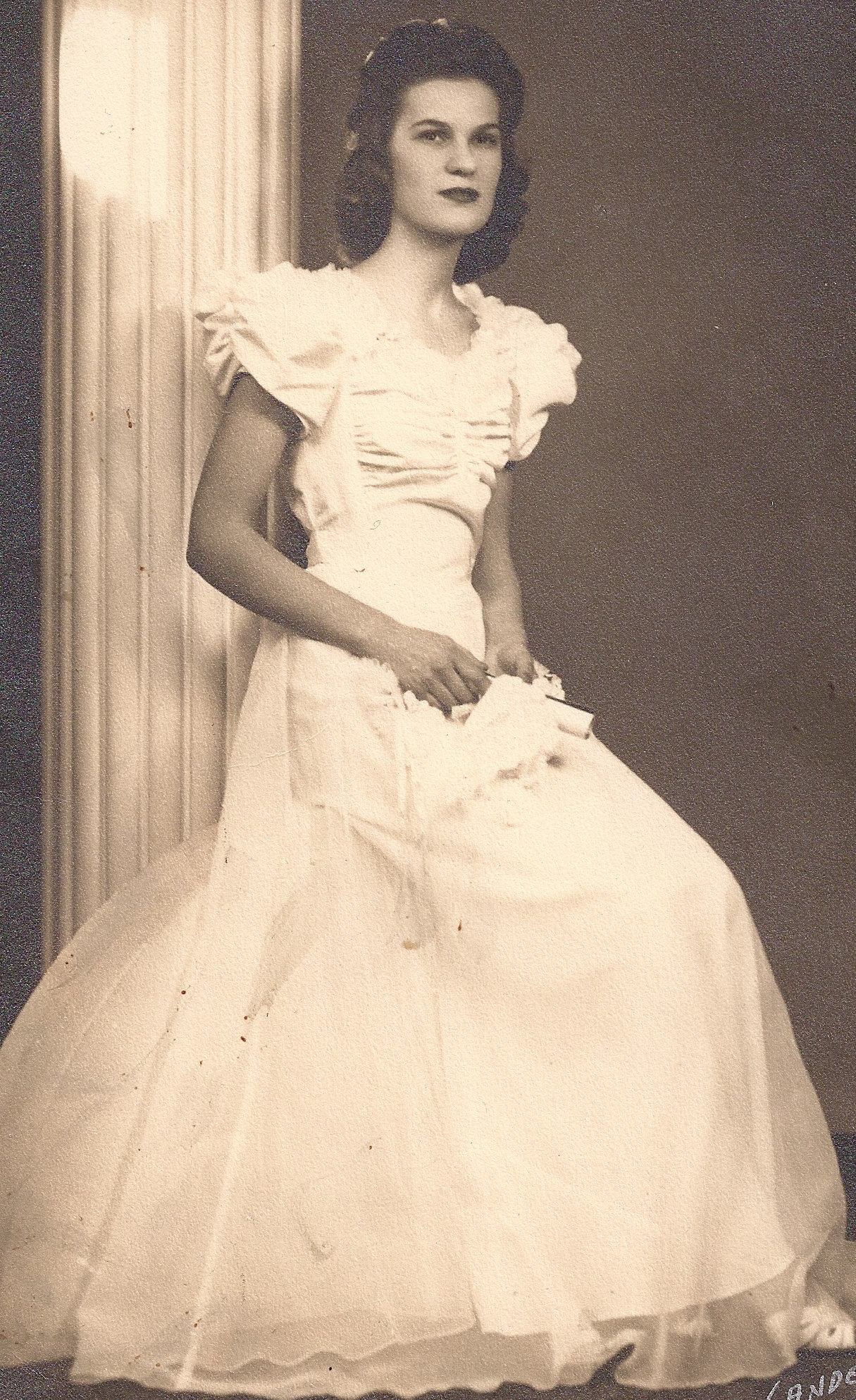
Angela first spoke English when she went to school. Italian was spoken in their home, at church, and on the radio. She skipped 2 grades and graduated from high school at the age of 16; the only one of her family to graduate. Her first job was, unbelievably, as Society Editor for the Staten Island News. By the time she was 18 she was an executive assistant for the President and CEO of a chemical company in Perth Amboy,NJ. During the war, he traveled on behalf of the war effort so Angela ran the plant. While attending a Catholic Youth Council -CYC dance at her church, she was introduced to a sailor named Angelo Annarino, from Newark, Ohio, who would become my father.


The Quietest World War in History,Louise Annarino,1-13-2013
The Quietest World War in History,Louise Annarino,1-13-2013
Drones have enabled the west to fight a world war without its citizens being aware. These unmanned silent ships of surveillance cruise the world directed from afar. U.S. and RAF pilots control these flights from Nevada, except for the initial take-off and landing which are controlled by companion crews where the drones are physically maintained.1
The United States,unlike Britain also uses armed drones to attack targets the drone has isolated; the RAF uses conventional weapons once the drone has isolated a target. U.S. surveillance drones are also used by French forces to guide air attacks. The U.N. relies upon drone surveillance to understand threats to nations around the globe,and make appropriate decisions calling for intervention. Nowhere is this more evident than in the growing threat from Islamist rebels aligned with Al Quaeda in northern Africa known as A.Q.I.M. (Al Qaeda in the Islamic Maghreb), where troops from 15 nation regional block the Economic Community of West African States known as ECOWAS are being trained by the European Union.2
This world war is as different from the Cold War as the Cold War was from WWII,which differed from WWI. But, it is as widespread and threatens the survival of nations, and kills both combatants and civilians. There are at least two notable differences: First,the lack of awareness by citizens of the west that they are engaged in a world war; a war which will not end with the withdrawl of conventional troops from Afghanistan and Iraq. and second, the lack of attention we citizens of the west pay to media accounts.
There is growing concern over the backlash of the use of drones. However, the alternative to the use of drones would be far worse. There would undoubtedly be more civilian deaths,more combat deaths and injuries for soldiers on both sides,more property destruction,higher numbers of refugees,more danger to our troops etc.1 We must question,however,whether this reduced impact of war by the use of drones merely extends its duration by lessening our attention and outrage.
President Obama and Secretary of Defense nominee Chuck Hagel share a world view that war is hell and we only go to war when asolutely necessary. Each seems to understand far better than we that we are engaged in a different kind of war, a war where acts of terror are the weapon of choice by those bent upon the destruction of western economic,social, and religious dominance. Such a war cannot be fought with conventional methods. President Obama and Chuck Hagel are ready to restructure the Pentagon and the military industrial complex. The military and industrial complex is fighting back. Companies which manufacture conventional weapons fear lost revenues should they be forced to compete with high-tech robotics industries, or re-tool conventional arms to high-tech arms manufacturing plants. It is all about the bottom line for them. It cannot be so for the nation,nor for the security of its citizens.
Our national security depends upon a new methodology,one understood and currently deployed to maximum effect possible by President Obama. It behooves us to pay attention and to understand the need for change he suggests. A smaller overseas military footprint; development of new technology to reduce civilian deaths,increase certainty as to terrorist targets,use of surveillance for broader objectives etc. is our future.3 Beating swords into plowshares must still be our goal;but,how we get to that place is changing. However,we cannot condemn what we do not understand. The silence is deafening and Hagel’s Senate confirmation hearing will be more about protecting the financial interest of private contrators and arms manufacturers than our country. The dones may be silent. We need not be. We must not be.
1.http://www.telegraph.co.uk/news/uknews/defence/9552547/The-air-force-men-who-fly-drones-in-Afghanistan-by-remote-control.html
2.http://www.nytimes.com/2013/01/13/world/africa/french-airstrikes-push-back-islamist-rebels-in-mali.html?nl=todaysheadlines&emc=edit_th_20130113
3.http://www.popsci.com/category/tags/drones
Leave a comment
Filed under COMMENTARY, POLITICS
Tagged as Africa, aviation, Chuck Hagel, drones, France, Great Britain, politics, President Obama, RAF, technology, United nations, war