Will Tribalism Trump Citizenship?

Will Tribalism Trump Citizenship? By Louise Annarino,2-22-2013


My Mother’s side of the family is planning our first ever family reunion. That this is happening during a time when I am wrestling with the differences between being part of a tribe or being a citizen of a nation indicates the synchronicity which operates throughout the multiverse. What does it mean to be part of a tribe? What does it mean to be a citizen?


My first struggle for identity was between two tribes: my Father’s and my Mother’s. Was I Sicilian like Dad; or,Napolitan like Mom? “Half and half” Mom explained. In our house we referrred to two other larger tribes: our paisans (which included Siciliani,Calabrese, and Napolitani etc.) or “the Americans”.


The American tribe seemed stranger to me than the paisan tribe, and trying to fit into that tribe was quite confusing. For example, when visiting Americani one had to wait one’s turn to speak,slowing down conversation, but creating time for reflection. Portion sizes were miniscule at meals. I once had dinner at the home of a school chum and each person was allotted 1/2 a pork chop. I was starving when I got home and dug out the cold lasagna,because of course we always had left-overs in our over-stuffed fridge. But, my friend’s family had money to attend the symphony,go to the art museum and attend ballet. Mom could sing an aria as well as Maria Callas, or a pop ballad as well as Frank,and we danced around the kitchen together every day. She had won a jitterbug contest at radio City Music Hall at age 16 and music and dance filled our home. Each tribe had a lot to offer and I understood adhering to tribal dictates would have been a mistake.


I did not like the sound of English.Italian was much more musical and passionate in its delivery,using hand movements to extend and deepen meaning.English seemed drab. When I asked my Mother to teach me Italian and speak it more often so I could understand the adult conversations of my older extended family better she offered my first instruction in the difference between tribalism and citizenship when she stated, “You are an American now. You will speak English and learn to be an American. I will not teach you Italian.It will not help you become an American;it will only hold you back.”


When I responded that maybe I did not want to be an American she strongly set me straight. “It is America which protects us and gives us a chance to have a decent life, and to live in peace and prosperity.” As a woman particularly, she warned me that I should be greatful to be an American. “It is not so easy to be an Italian woman,” she explained. We are lucky to be Americans and living in the best country on earth. Italy was the “old country”;America is our country now. At Thanksgiving, Mom cooked turkey with all the trimmings, plus antipasto, lasagna and garlic bread. At Christmas and Easter we ate ham plus ravioli. Tribally, we were both Sicilian and Napolitan,both Italian and American. As citizens we were all-American.


When I listen to fundamentalist,tea-party,NRA furor I hear tribalism trumping citizenship. When I read about the Taliban, AlQuaeda in the Magreb and other such groups I see tribalism trumping citizenship.Tribalism is a threat to peace, and must be kept in check. The Soviet Union was an horrific and failed effort to reduce tribalism. The United States of America is the wondrous and best example of a successful effort to reduce tribalism. How do we do so? Through our Bill of Rights which covers every single citizen,even though we are still trying to make that a reality in fact.


We end tribalism through citizenship. The nation becomes larger and more meaningful to a citizen whose rights and freedoms are protected and preserved, than his allegiance to a tribe, especially one which tramples upon human rights and fails to protect the human rights of every member of the tribe. This is why the Soviet-Union failed, why Al Quaeda will fail, why any tribe seeking to assert its authority over a nation instead of under a nation is doomed to fail.


Which brings me to immigration reform. We must never approve an immigration policy which focuses on controlling tribes and creating an underclass through work visas, or one which allows women to be denied full freedom. The centerpiece of any sound immigration policy must be a path to citizenship. Do we really want to allow various tribes to live within our borders without citizenship? Do we understand that this would endanger our democracy?


This is a real danger. Tribalism is a threat to those outside the tribe,and often to those within the tribe. The only reason America has been able to peaceably self-govern and overcome the tidal wave of tribes,with all their differences, is through offering full citizenship to those willing to pledge allegiance to our constitution and to our Bill of Rights, which often flies in the face of the tribe’s belief system. For example,The Violence Against Women Act is being opposed by Republicans in part because it affords protection against violence for immigrant women. Do we understand the tribalism which perpetrates such violence, under a veil or not? Do we understand the tribalism among some Republicans which would deny a human right to a woman outside the American tribe? Tribalism is a threat both from tribal Americans and from tribal immigrants.


Citizenship carries rights and privileges, but it also demands allegiance to an enlightened set of principles laid out in our Constitution and Bill of Rights. We can’t have one without the other.Those who would zealously guard such principles, must also demand such allegiance.However, if they do not offer the rights of citizenship, they cannot demand allegiance to America. For over 200 years we have not invited tribes to settle here;we have invited citizens to settle here. That has kept us safe.That has kept us free.


We cannot understand the importance of immigration policy unless we understand the difference between tribalism and citizenship.

2 Comments

Filed under COMMENTARY, POLITICS

States’ Rights and Immigration Reform,By Louise Annarino,1-30-2013

States’ Rights and Immigration,by Louise Annarino,1-30-2013

Political pundits have ceased describing bi-partisan discussion of Immigration reform as an attitude of cooperation, thank goodness. They have moved beyond that wishful thinking to a more realistic view that Republicans understand they must change their legislative approach to remain more competitivewith Democrats for the Latino vote. This is true, but does not go far enough, to understand why the Republican party is not your father’s Republican party.

Democratic House minority leader Nancy Pelosi(D-CA) recently opined that House Republicans are anti-big government. This is why they will always vote no on any legislation requiring federal government rules,regulation or oversight. However, it is not that Republicans are anti-big government;nor even always anti-federal government. They are anti-federal(big) government only when it does not serve their purposes. They only oppose big government they do not like. And their purpose, following the civil rights gains of the ‘60‘s and 70‘s and demographic changes coloring America since the ‘80’s, is to preserve white-Anglo male dominance and power. Once again, as so often in our history,ethnocentrism and racism tied to money is the underlying force behind our politics.

Republicans have no problem with a federal government which rewards the top 1% and corporations with tax breaks,tax loopholes,and government contracts. Republicans have no problem with federal emergency relief which protects their voting base.This base of Republican support is predominantly white. On the other hand, they oppose such considertion for urban residents,unions-especially government employeee unions, the middle class,and the working poor. The one thing these groups have in common is their diversity. In opposing early voting in the 2012 election,Franklin County,Ohio Republican Party Chairman Doug Preisse,was quoted in The Columbus Dispatch newspaper as saying, “I guess I really actually feel we shouldn’t contort the voting process to accommodate the urban — read African-American — voter turnout machine.” it clear that race is an underlying factor in maintaining Republican power and control. Even Senate Republicans’ renewed interest in immigration reform illustrates this.

Indeed, the Senate Gang of Eight proposes A Bipartisan Framework for Immigration Reform which includes a provision that the governor’s of border states,their attorneys general, and community leaders would staff a commission to monitor and enforce new immigration measures. This is an example of using the power and purse of a strong federal government while claiming control through states’ rights strategy to deflect any outcomes which they disapprove.

Who are the governors of our border states? Rick Perry(R-Texas),Jan Brewer(R-Arizona),Susana Martinez(R-NewMexico),and Jerry Brown(D-California). While their input is certainly of value;they are not currently empowered to direct nor control immigration prolicy and procedures. Who would be the community leaders appointed to the commission? The Southern Poverty Law Center has identified some community leaders incvolved in border security as members of “hate groups”. How would such  leaders  be denied membership? Former New Mexico Gov. Bill Richardson wrote in an op-ed for CNN on Jan.30,2013, the “Supreme Court ruled emphatically that immigration is the responsibility of the federal government, not the states.”http://www.billrichardson.com/news/bill-richardson-oped-cnn-stars-align-last-immigration-plan.

As we watch immigration reform enacted into law,we must assure that neither hate groups,nor hateful politicians,nor persons pushing a racist and ethnocentric agenda usurp what must be a fair and just resolution. We must not forget that Republican opposition will not be due to anti-big government sentiment, but something far more difficult to eradicate. We can support those Republicans who are willing to confront the real issues facing their party. But, we must never consent to the demands of the hate-mongers who hide behind states’ rights.
Leave a comment

Filed under POLITICS

Teenage Signals,by Louise Annarino,1-30-2013

Teenage Signals,Louise Annarino,January 30,2013


We take street lights for granted.

Green,yellow,red

syncronized swimmers

against the traffic tide

bringing order from confusion,

organizing patterns

of construction,

avoiding accidental

destruction

of our pride.

You are not mine.

Independence fuels

your journey,but you

are never alone.

You have me,

a streetlight,

one of many,

often unnoticed

and many unknown,

at every intersection,

seeing you safely

on your way

from youth

to adulthood

and beyond.

Leave a comment

Filed under POETRY

Rockslide,Louise Annarino,1-26-2013

Rockslide,Louise Annarino,1-26-2013


Another day started late

beyond the time to contemplate

justification for the time spent

writing a poem

few will read.

Nerves on edge

of a precipice built

with loose gravel,

not a sturdy life,

but shortened breaths

encased in gossamer

wings no longer

able to fly.

And, again

I ask “why?”

Why energy fled

before the keep was taken,before

the soul was shaken

like a tambourine’s

tinny sound,

uneven like my steps

placed in fear

of falling down

on my own,

or in the rockslide

my life is built upon.

Leave a comment

Filed under POETRY

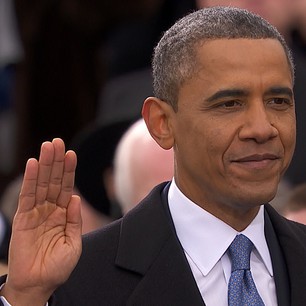
Visions,Dreams and History:Barack Obama’s Second Inauguration,Louise Annarino,1-23-2013

Visions, Dreams and History: Barack Obama’s Second Inauguration,Louise Annarino,1-23-2013

We each use different words to describe singular events.Like the optical illusion in which some see an old woman with a large nose,and others see a young woman,we see more than a single meaning in President Barack Obama’s second inauguration.This one matters most to me.

b63462fc63eb11e2a97322000a1fb158_6

When I read DREAMS OF MY FATHER, just written by someone unknown to me named Barack Obama,my first thought was that this man could be our first African-American president, and a great American leader. From that moment I have watched him grow into both roles.

He is someone future generations of Americans will appreciate far beyond what we do today. As I listened to his second inaugural address I heard our history transformed into one closer to the truth. His words cut closer to the bone than anyone had expected. It was thrilling to watch him weave a tapestry of the development of our greatest ideals of “life,liberty, and the pursuit of happiness” from our Declaration of Independence,through a civil war, and into a civil rights movement which continues to create a more perfect union. He joins a clear line from George Washington and John Adams to Abraham Lincoln and Teddy Roosevelt to Franklin Delano Roosevelt and Martin Luther King,Jr. There is a greatness and a challenge in President Barack Obama’s words which transform the American story, and opens our eyes to its great truths.

Liberals and conservatives alike are dissatisfied when they cannot construe Barack Obama’s efforts in a manner which serves their world view. Visionaries, like prophets of old, are often unwelcome in their own lands. To appreciate who they are we must stand outside the mundane boxes of our own making, and peer at them from afar. Only then, from the distance of time, do we fully appreciate the transformative process such leaders of men put in place.Those unwilling to make such a journey of the mind and heart will find my view an overblown adulation of a flawed man. I see the flaws but greatness makes them fade from view,allowing us to focus on what is truly important; i.e. we are a nation of the people,by the people, and for the people. Generations to come always deify those we vilified while visionaries challenged the status quo..

The British government put a price on the head of traitor to the king George Washington, and other founding patriots. He could have been hung. Attorney and patriot John Adams, who believed every person is entitled to a legal defense, was vilified and threatened for defending eight of the kings soldiers, six successfully, who shot to defend themselves against a mob in an event called the Boston Massacre. Abraham Lincoln was one of the most hated men in the nation by many in slave and non-slave states alike,who disapproved of his political maneuvering around the issue of slavery. Teddy Roosevelt was vilified for the obscene “dinner that shocked a nation” in which ex-slave Booker T. Washington ate with the president and his family at the White House. http://historynotebook.blogspot.com/2008/11/booker-t-washingtons-white-house-dinner.html He was no less hated by westerners for developing a national park system and protecting huge swaths of land against private development. Despite pulling the nation free of an economic depression,and successfully prosecuting a war, destroying the threat to human lives by fascism and anti-Semitism,and forging a peace which made friends of our former enemies Franklin D. Roosevelt was vilified and attacked.  Peaceful civil disobedience proponent and civil rights leader Martin Luther King,Jr. was hounded by the F.B.I. as a socialist/communist provocateur. He found his life threatened at every turn by white fear and loathing. Creation of a holiday in his honor brought renewed political opposition to his legacy.

Today, we forget the vilification of those we now call heroes,patriots,icons of American democracy;those who fought inch by perilous inch through a sea of hate and disdain, to create a more perfect union of the United States of America. Obama’s second inaugural speech will be remembered long after the snide comments of political pundits, and the short-sighted praise of his friends. It established a true rendering of the issues and events marking the era in which he served as the nation’s president. Our gret-grandchildren will know him,and us, by this speech.  For myself and for generations to come, I now thank him.

You can view the entire text and video of  President Obama’s speech at this link:

http://news.bbc.co.uk/2/hi/americas/obama_inauguration/7840646.stm

Leave a comment

Filed under POLITICS

Second Inauguration of United States President Barack Obama,Louise Annarino,1-20-2013

Second Inauguration of United States  President Barack Obama, Louise Annarino,1-20-2013

I routinely ran out of gas in 1972,the year I finished graduate school and became a prison social worker 35 miles from my home. Back then,cars did  not have warning lights when fuel was low, nor meters expressly keyed to gas tanks to tell one how far she had driven since the last fill-up;at least,not on any car I could afford.

Driving was always an ordeal to make it to my destination before the tank was empty. I rode on fumes the last few days before pay-day. One Christmas, friends gave be a bank made out of a gas can with a $20 bill inside.They told me to keep it in the trunk, and not to use the cash, until the next time I ran of gas.This was to be my new alternative to calling them for help as I sat on the berm.It worked the first time.After that, I had no money to put in the can. I was back to square one.

I learned a lot sitting by the highway watching cars speed by. Enough to understand the larger world’s frustrations, fears and even animosity toward the global power of the United States. Even those who are our friends often look on in amazement and incredulity at our narrow,short-term focus. Even fellow Americans find it difficult to understand.

I wondered about the driver of a car with a full tank as he drove by my disabled car -hood up and flashers flashing- without a glance my way. Does he not see me? Does he have no time to stop? Is where he is going so important he cannot stop to help? Does he expect other help will arrive? Does he fear me? Even more disconcerting were those drivers who glanced my way and smiled as they sped by. Did they think their smiles showed empathy? Did they think it was a joke to run out of gas? I hoped for a thumbs up, help is on the way gesture. Instead, I too often got the finger, the one that conveys disdain,dislike and blame.

I was to blame. It was my decision to not refill the tank when it got below 1/4 tank. But, that decision was made by the fact I had no cash. The little I made as a state social worker paid for rent,utilities,car payment,car insurance,and school loans. I packed my lunch,never ate out,nor ever saw a movie. I did all I could with what little I had. Some countries are like that. Not every country has a GDP equal to that of the United States;nor every citizen a job paying enough to always drive with a full tank. People and countries do the best they can with what they have to work with. Yet, we speed  by them when they are forced to sit on the berm.we ignore them,smile at them,give them  advice,even give them $20 once in a while. And some of us give them the finger. None of these efforts solve the underlying problems.

So, as I sat there on the berm I could feel my resentment build over time. No amount of prayer,smiling,or waving my arms stopped a car. Only the good-heartedness, fearlessness, and generosity of a particular driver did that. For which I was inordinately grateful. As I matured, improved my personal economy, and could afford a car with warning lights I stopped running out of gas. Countries are like that,too. Too many have little chance of doing what I was able to do here in the United States.

WW II created many new countries,dividing tribes and cultural groups with artificial lines. The imperialism of the West,so ingrained and institutionalized abroad, continues today. Multi-national corporations  harvest and sell the young countries’ natural resources, influence the non-development of new enterprises which would compete for their profits,and drive toward these countries toward their futures with blinders on. They do not see those standing by the side of the road. Or, if they do, too few stop to help. And helping one-by-one without solving the underlying problems does not create a lasting solution.

Thus,resentments build, even within the hearts of those who appreciate the corporations which bring  jobs, have made friends across national boundaries, seek a common goal,and are people of peace. When the few who do not seek peace,who share no common goal come among them with a can of desperately needed gas, they cannot easily turn them down. Who knows when the world’s drivers will take notice of them waiting on the berm? Who knows when the world will begin to work on solutions which last? This was the hope which President Obama brought to the world. This is why  those waiting on the berm rejoice at his election and re-election. President Obama knows the world’s byways,sees far and wide as he drives the ship of state, plans for a lasting solutions,with a long view over time. Those of us on the berm understand and appreciate him for this.

I think of Libya,Chad and Algeria. These are not surprises to anyone who has traveled the world’s byways with eyes wide-open,scanning the berms on each side for other travelers in need. Unfortunately, those who think stopping to help those on the berm delays their own progress oppose our president. Those who prefer to drive among winners and not the losers standing on the berm,oppose our president. And, there are too many of us who fear those waiting on the berm; too afraid to chance stopping to help a fellow traveler. They actually fear our president, or try to make us afraid. If we want a lasting peace with the world, and an end to terrorism and war, we need to be better drivers and better friends to  our fellow travelers on this globe. That is President Obama.That is the President the world knows and loves.That is my president! I hope you enjoy the second inauguration of President Barack Obama. I know I shall.


Leave a comment

Filed under POLITICS

My Grandma Louisa Abbruzzi,By Louise Annarino,1-18-2013

My Grandma Louisa Abbruzzi,by Louise Annarino,1-18-2013


She brought me warm peaches

juicy pinks and yellow

from the fruit man’s cart –

just because I loved peaches.


She called me in from play

when my cousin tormented me

with threats of abandonment –

just because I needed acceptance.


She shared a nap with me

when no one would answer my questions

so she could tell me her stories –

just because I wanted to know.


She sang Neapolitan love songs

as I danced about the kitchen

on rainy days –

just because I needed to move.


She stroked my face

with hard, callused hands

worn rough tending ten children –

just because I needed soothing.


She grabbed my “rosie cheeks a la la”

and kissed me soundly,

painfully and laughingly –

just to make me giggle.


She dried my tears

with the hem

of her threadbare dress –

just because I treasured her comfort.


She spoke little English, but

she spoke the language of love.

I knew her only 8  short years.

I shall love her forever.

2 Comments

Filed under FAMILY STORIES, POETRY

Running To Catch Up,Louise Annarino,5-29-2012

RUNNING TO CATCH UP

ImageLouise Annarino

May 29, 2012

My first memories of my father are the most precious, foreshadowing our life-long relationship. My five feet four inch giant, happy-go-lucky father would scoop me up with both arms, lift me high with legs dangling, then tuck me into the crook of his right arm, both of us chuckling madly at our good fortune. I was just learning to toddle and could not keep up with my parents and three year old brother whose hand Mom kept in a firm grasp. As I got a older, it was Dad who held my hand, as Mom gripped the hands of both my older and younger brothers. They seemed a world apart from me and Dad. While Mom was intent on teaching the boys to walk like little gentlemen at her side, Dad and I were off on a merry jaunt.

While Dad loped along with an easy gait, my short legs scissored so fast to keep the pace I would trip. Up I went into Dad’s arms. He never slowed down, nor stopped grinning at me as if we held some grand secret, even as Mom chided him to slow down and let me walk! I can still see his discomfort trying to arrange the frilly dress and crinolines layered over his arm, while Mom rolled her eyes at him. He loved to make Mom roll her eyes. He would reward her with a kiss and a laugh.

Dad’s cousins had warned her before they married “Angelo is ornery.” Mom liked ornery. We all liked ornery. Dad worked long hours with his brothers John, Joe, and Frank and cousin Johnny “Dayton” running an Italian-American restaurant. Every other week, it was his turn to be home between 5 and 7 pm before returning to stay later to close. That meant we could have our supper all together.  We would fight over who got to sit next to Dad. Mom joked, only because she knew we could never afford a new one,she would soon buy a table with a hole in the center for Dad to sit in so we would each be near him.

Dad could draw the best cartoons and funny pictures, but he could not spell worth a darn. His notes to school would read, “please excuse Lousie from class as she had a sure throat and we had to keep her home.” “Lousie? Dad, you called me lousie! Sure throat?” I would protest. “Sister knows who you are,”answered Dad. “Don’t worry. Nobody’s perfect. It will give her a good laugh! She needs one.” She did. Most teaching sisters did need a good laugh. Most Moms, too. Dad kept them all laughing.

Mom could never threaten us with “Wait ‘til your Dad gets home.” Dad usually thought our daily shenanigans great fun. He would try very hard to keep a straight face as he berated us for some activity my Mother thought out of bounds. Then he would relate some of the trouble he got himself into as a kid, “one-upping” us every time.No one held their breath over Dad’s discipline.

It was Mom who chased us through the house with a wooden spoon to smack our behinds. She could not run very fast, she seldom got close enough to connect spoon to backside. Her aim was awful, too! Faking her frustration at her failure to get us, she would crack that spoon over the telephone bench so hard it broke in half. “Next time,” she would threaten, “when I buy a stronger spoon!” It took years, and many broken spoons, to realize Mom had had no intention of catching us.

The only time silence and tears welled up in us over Dad’s discipline style was when he took off his belt and ordered my older brother into the bathroom for a whipping, with Mom’s full support. I remember sitting at the table, looking at the faces of my younger brothers, our eyes open wide in fear, as the sound of the belt connecting was followed by Angelo,Jr.‘s tearful screams. As both Angelos rejoined a now solemn group of children at the table, my brother would be wiping the moisture from his face, his and dad’s eyes downcast, faces blushed in humiliation. We were the best-behaved kids on the block for at least the next twenty-four hours, an eternity to us.

It was not until one Thanksgiving at that same table, thirty years later that we learned the dirty little secret about Dad and Angelo. Taking his tight belt off so he could eat a second helping of Mom’s lasagna (yes,we had turkey and lasagna),we started a discussion about other instances where Dad had to take off his belt. The Angelos finally confessed that Dad would hit the clothes hamper with his belt instructing Angelo to fake screams. Before leaving the bathroom, Angelo would splash water on his face to create false tears. Both kept their eyes downcast when they rejoined the table to stop the laughter they each held back, blushing with the effort. All those years we had wondered why only Angelo ever got the belt.

Mrs. Rowe lived on the huge lot behind us which stretched from the side street all the way to the alley. Neighborhood kids played baseball there until she called “Kreager”, the truant officer, to report our trespassing. Kreager would tell Dad, stopping in for a drink at the restaurant before he headed down to the south-end to clear us out, so Mom could get everyone out of Mrs. Rowe’s yard before Kreager showed up. This seemed to make everyone happy for the moment and no one had to worry about going to juvenile hall for playing baseball in Mrs. Rowe’s yard. I once hid in the bushes along the alley edging her property and overheard Mrs. Rowe chastise him for being so slow in responding to her calls. She desperately wanted him to catch the “juvenile delinquents” in the act. Kreager answered her that she should be glad we wanted to play in her yard. Our poor neighborhood had no playgrounds, no place for kids to be kids. She should “do her part” and let us have a place to play so we did “not become juvenile delinquents,” he told her. In such overheard conversations are great truths revealed to children.

Mrs. Rowe had an ancient and fertile apple tree in her yard, just over the wall between us but not within reach of our short arms. The tree produced sweet,firm yellow-green apples on limbs far above our heads. The ground apples were fine for Mom to make applesauce, but not for eating. We stood slightly out from under the tree hurling the fallen apples, knocking the good apples to the ground where we would gather them up. Mrs. Rowe was no happier with chucking apple-pickers than with ball players. She informed us “I don’t want you kids in my yard knocking apples out of the tree. You can have any apple you find on the ground, but do not stand in my yard and throw apples at the tree.” This was no bother for Mom but left us dissatisfied until we got the bright idea to use the clothes-line pole to extend our reach.

We still had to find a way to reach those apples without standing in Mrs. Rowe’s yard, focusing on the stand in my yard part of her reproach. So, I stood on our wall and swung the pole out toward the tree, while my brothers waited below. Swinging the pole didn’t knock down a single apple but invariably knocked me off the wall. We gave up. The boys went off to play near the railroad tracks.

I went inside surprised to find Dad asleep in his chair on a rare afternoon break, while Mom fixed dinner. I awoke Dad and asked for his help outside. He came without question, still half-asleep. I placed him on the wall and handed him the pole, instructing him to start swinging the pole at the apple tree as soon as I climbed over the wall into Mrs. Rowe’s yard. I forgot to tell him about listening for the squeaky door hinge which would tip him off that Mrs. Rowe was about to discover us. That loud hinge gave me just enough time to hide in the bushes. Thus, when Mrs. Rowe came around the corner off her porch all she found was Dad, standing on the wall, swinging the laundry pole, apples flying out of her tree. “Mr. Annarino! No wonder your children are such delinquents. Shame on you.”

I waited until Mom called us all in for dinner, expecting a stern lecture or worse from Dad. Instead, as soon as he saw me Dad started laughing out loud asking, “Where on earth did you get to so fast? How did you know to run?” He thought it one of my best pranks, ever.  But, he admonished, it was one we could never repeat. With Dad,everything that happened in life was a cause for joy; and,learning life’s lessons was always fun.

Dad, Mom, Mr.Kreager, Mrs. Rowe – each of them so far ahead of us, with so much to teach us simply by being themselves. Each of them loving us and expecting us to grow into respectful and respected adults. But, it is Dad’s lessons and laughter I hold dearest. His ability to see the absurdity of rules, his ability to avoid the ordinariness of daily living by adding his own creative spark, his willingness to risk the haughty stares of others for a bit of good fun made every day a delight for us. We had no wealth, but we ate well. We never took vacations, but were always on vacation from disquiet and poverty. We worked hard within the harsh reality of the working poor, but we laughed harder than the seriously wealthy. Dad was a man on the go his entire life. He has been gone over 12 years. I am still running to catch up.

Leave a comment

Filed under COMMENTARY, FAMILY STORIES

WHAT ONE DADDY TAUGHT HIS LITTLE GIRL,Louise Annarino,1-18-2013

WHAT ONE DADDY TAUGHT HIS LITTLE GIRL,Louise Annarino


My daddy’s name was Angelo. He grew up without a Father to show him how to be a dad. His dad was a  skirt-chaser who left his wife alone to raise their four sons. Angelo was the baby. At age 3, when he lay on the sofa, dying from rheumatic fever which damaged his heart, the doctor went to his father to tell him so he could go visit his son and comfort his wife. Angelo’s father never showed up; not that day, and not until Angelo who was stronger than anyone could guess and thus survived, was in high school and old enough to help his father work his produce stand in the old Market Canal warehouse. Angelo cleaned the celery in buckets of ice water. His hands grew colder than the ice. But, his heart, his damaged heart, was always warm; especially for his little girl.


I was told that Daddy’s buttons popped off his shirt when his second child was born. Angelo was present in the room when I emerged from my Mother’s womb and he heard the doctor say, “You have a baby girl.” He had always wanted a sister and cherished the role of being a father to a little girl, and was thrilled  his sons (he would have three sons) would have a sister. He had done something his father had been unable to do. As a teenager, Angelo had discovered his father had secretly sired a daughter with one of his paramours, but Angelo never knew this sister. Angelo did many things his father had been unable, or unwilling, to do. The most important ?  He loved his children and was ever-present to them; an amazing feat for a man who worked 16 hour days, six days a week.


Daddy and his four brothers, one cousin, one retired uncle, and Angelo’s best friend ran an Italian-American family restaurant. At first, Mom did all the baking, and made pizzas. After I was born she stayed home to take care of my older brother and the brothers who came after me. Dad may not have been home much, but I always knew where to find him. Not once did I feel I had interrupted him. My presence in the restaurant was never questioned. I was as much at home there as in my own living room. Being where Dad was ? That was being “at home”.


These are things my daddy taught me:


  1. Being hugged, held and comforted can make the most difficult situation bearable. It takes away pain and builds one’s strength to allow others to offer comfort. I recall a day my mother had had enough of motherhood, and especially enough of me. Caring for a 3 year old son and a 1 year old daughter had taken its toll on her. She called my dad home from work to help her. When he arrived she told him “Take this child out of here ! I can’t do this today !” Daddy reached down and pulled me into his arms, cuddling me close and humming a sweet buzz in my ear as I hiccuped my cries. I felt his big thumb gently catch a huge tear sliding down my cheek. I looked into his eyes which were smiling at my own. I stopped crying. Daddy took me out and we went for a drive, giving Mom some time alone to calm herself and have a cup of tea while my brother napped. I never napped. While that was probably the real issue, I felt I was the issue. I often felt rejected by my mother. But, my father never rejected me. When I wet my bed at night and crawled over my mother to fit my wet-pajama self in between them, it was Daddy who soothed me and changed my sheets while Mom complained at the extra laundry I was creating for her. Daddy taught me that rejection by others, and their complaints about me, had more to do with their own needs than with me. He soothed my mother and he soothed me; blaming neither one of us. His compassionate understanding of human nature was one of Daddy’s greatest gifts to me.


  1. Money alone does not solve the problem of poverty. Daddy always  took me with him when he collected rent from Grandpa’s renters who lived on an alley near the railroad tracks downtown. We also rented a house from my Grandpa a few blocks away; but, ours was shingled and well-kept. This house was a run-down unpainted shack. Daddy took me because the renters had several small children, including a little girl my age. While he went inside to collect whatever rent he could, I played with the children in the front yard. Often, Daddy paid part of their rent rather than tell Grandpa they could not pay. He told me not to tell anyone. He explained that the people were doing the best they could do and he did not want the family to suffer. His job, he explained, was to help the parents relax and feel safe. My job was to help the children relax and feel safe. Being poor, he knew from experience, made children worry and feel scared all the time. Helping with money for rent was not enough; we needed to show people they could feel safe enough with us to enjoy life. His passion for life’s joys was something to share with everyone, even those who otherwise could not afford to simply enjoy life. His passion for helping others to enjoy life was one of Daddy’s greatest gifts to me.


  1. Girls have the same rights as boys. Every summer we went to Staten Island to visit with my mom’s sister Millie. Daddy drove us there and weeks later he returned to pick us up. He only stayed a few days before driving back. My Uncle Sal loved to go “crabbing”. What seafood feasts we had. One evening I overheard him and Daddy talking about what time Aunt Millie had to wake them and the kids, so they could string the cages and place them on the outgoing tidal floor. I was ecstatic to be able to join in. When I climbed in bed early so I was sure I could get up at 3 am, Uncle Sal informed me I was mistaken. “Only boys can come; it is no place for girls,” he stated. Crestfallen, I implored my Dad to let me go. My Dad who always included me when he pitched balls to the boys, taught us all how to block a tackle, connect with a boxing bag, and bait a hook would certainly allow me to go crabbing, too. He took one long look at me and calmly told Uncle Sal, “If my daughter cannot go, neither can I, nor my sons.” That is all it took. A willingness to make sacrifices so that everyone can be included in life’s opportunities was one of Daddy’s greatest gifts to me.


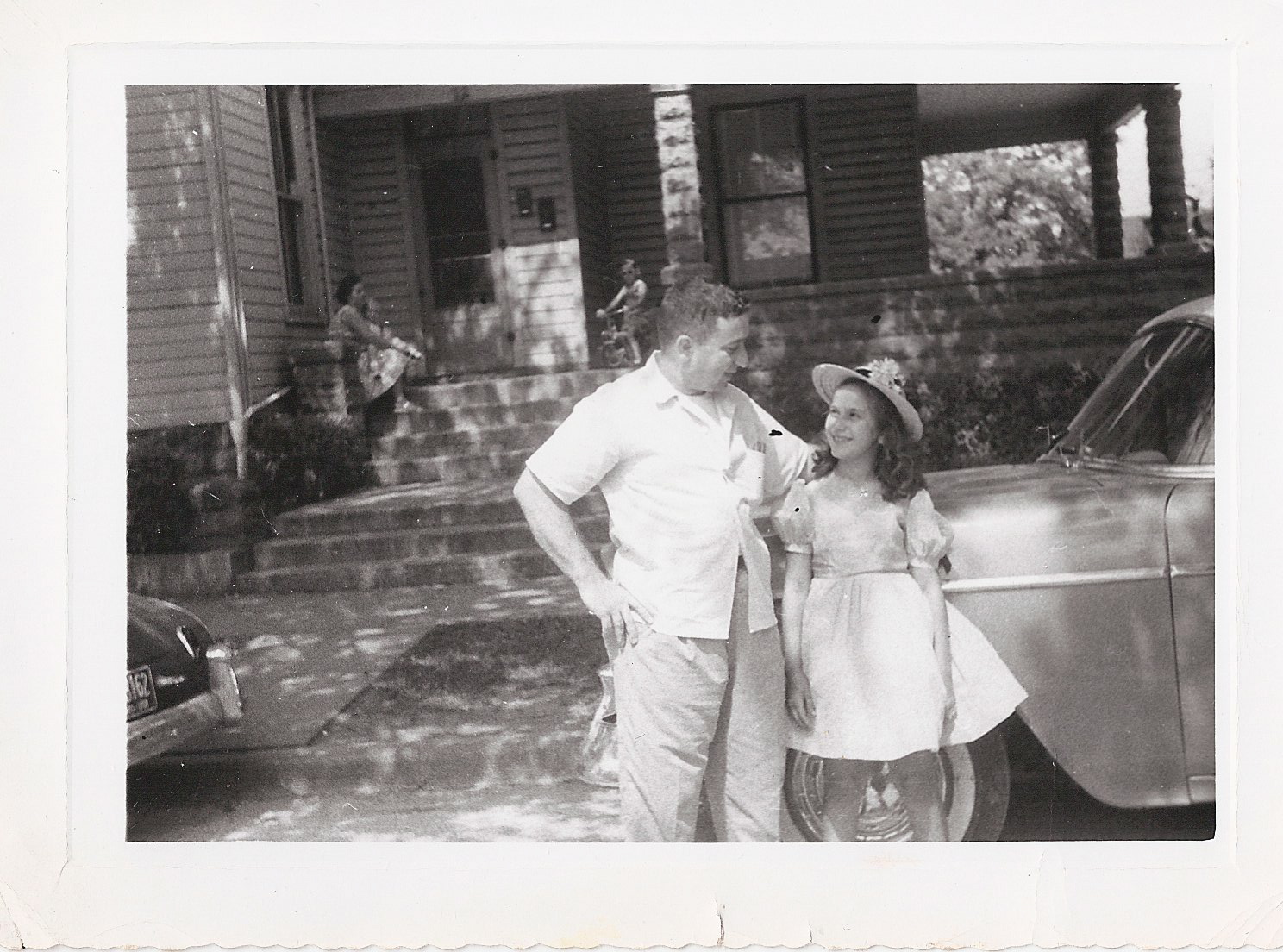
  1. It is not how one looks or dresses which makes a girl feel beautiful; it is how one is honored and cherished which makes her feel beautiful. And, being cherished is what every girl deserves. I started dancing school at age two. Every monday and wednesday evening and several hours every saturday until I was fourteen,  I was practicing at Marjorie Pickerell’s Dance Studio, a few blocks around the town square from my dad’s restaurant. After lessons I walked over to eat my dinner and Daddy would drive me home. He could never take off work for my recitals since they occurred during the busiest part of his work day.  But, he came to a recital once, at the close of my routine, which was the close of the recital. That year the recital theme was “The Wedding”. I danced as the bride; the wedding was the final number. I wore my frilly white First Communion dress and veil as my wedding costume. But it was not the dress that made me feel beautiful; it was Daddy. My partner groom and I had just left the stage to applause, when Marjorie ushered me back out onto the stage to take an encore bow. There, at the base of the stage, between the footlights which blocked out all the audience but allowed me to see him was the man who cherished me. Still dressed in his standard black pants, white shirt, and stained full-length white apron stood my Daddy with a huge bridal bouquet which he presented to me as though I were the world’s greatest ballerina, to much audience laughter and applause. He had only seen me dance in his mind’s eye, but what he saw was beautiful. And so, I was. Giving me a sense of my own beauty was one of Daddy’s greatest gifts to me.


  1. Racism was omni-present in my world. It was something I knew I had to stop. As a second generation Italian-American I grew up hearing stories of prejudice endured by my family and friends. However, our ordeal was minor compared to what I saw African-Americans endure. I was incensed by the fact that there seemed no escape for them, as there was for me. When I read about apartheid I was stunned that our government continued to do business with South Africa and Rhodesia. “Then, do something about it”, Daddy entreated me. “I’m only 10 years old,” I argued. His close childhood friend, Republican John Ashbrook had been elected a congressman and Daddy suggested I meet with him when he came home for constituent meetings. On a saturday morning I climbed into a chair meant for an adult, and asked Congressman Ashbrook sitting at his desk in the Licking County courthouse how he could justify his recent vote to buy chromium from Rhodesia when that government continued its policy of apartheid. We discussed the Rhodesian issue and the issue of American racism at length. From then on, Congressman Ashbrook and I began a lifelong correspondence. He sent me copies from the congressional record of any reference to racial issues at home and abroad. The complexity of issues and the detailed efforts to chart a corrective course through the halls of congress became clear to me. Although I remain a liberal and Mr. Ashbrook was a strong conservative we were able to reach consensus on many issues. That is what Daddy wanted me to learn. Life is difficult. Problems are thorny. Nothing is perfect. But, we must make every effort to change our world for the better and we can only do so by engaging those with whom we disagree. It is easy to complain among our friends; but, hard to solve problems with those with whom we disagree. Showing me that no matter what my limitations, I must do my very best to resolve problems, going as far as possible no matter how foolish I felt, was one of Daddy’s greatest gifts to me.


  1. After my first year of law school, Congressman John Ashbrook offered me a summer internship in Washington, D.C. I was preparing to drive from Cincinnati to D.C. when I got a call from the congressman, “Louise, I am so sorry, but I was at the restaurant last night talking with your Dad and I have to withdraw my offer. You cannot work for me this summer.” It seems Daddy told Mr. Ashbrook that their 40 years of friendship were over unless he withdrew the job. Daddy felt Washington was not a safe place for a young woman, despite Mr. Ashbrook’s assurances he would keep an eye on me. After much wrangling, he gave into Daddy and called me. My faith in all I believed about Daddy was crushed in that single phone call,even as my love for him endured. I could not understand his lack of faith in me. Years later, my youngest brother served as an intern for Congressman Ashbrook for two summers, while he studied law. I asked Daddy why he allowed my brother to go to Washington, but blocked my opportunity. He answered that my brother was more selective than I, more cautious than I and, therefore, less likely to get himself into a situation he could not handle. I, on the other hand, never saw a situation I did not think I could take charge of, was afraid of nothing and no one, and constantly sought out the most difficult challenges – those no one else was willing to take on. And he added, “sexism”. I finally understood that Daddy had not lost faith in me. He knew exactly who I was and felt he needed to protect me; not from Washington, D.C. but from myself. It took courage to do that. He risked my love for him to protect me. I still disagree with his decision because I still think I can handle anything. I have proved my Daddy’s case. Learning to accept who I am, who those I know and love are, warts and all, was one of Daddy’s greatest gifts to me.


My Daddy lives on in my sense of self. His gifts to me are endless. Many little girls are fortunate to have similar stories about their daddies. Too many little girls have no such stories. Let us remember our daddies. And, let us pledge to do all we can to create a community where every little girl can grow up with such daddies. There is much to do. As Daddy would say, “Stop your bellyaching and go do something about it !”


Leave a comment

Filed under COMMENTARY, FAMILY STORIES

Abbruzzi and Annarino Coming Together,By Louise Annarino,1-17-2013

ANNARINO FAMILY: John and Mary,My Paternal Grandparents


Josephine “Mary” Mescari liked to say she was started in Italy and finished in America, born four days after her parents disembarked from their ship. The Mescari family came from Siracusa, Sicily and settled in Cincinnati, Ohio. Her marriage was an arranged one; she met her fiance’, John Anthony Annarino the day before her wedding. Chaperoned by her aunt, she and John took a brief carriage ride around the block, barely exchanging a word. This set the stage for a failed marriage and eventual divorce.

John Annarino had been born in America, the son of immigrants from Termine Immerese, Sicily. A handsome charmer, the marriage did little to slow his pursuit of female attention. As a young girl, I met many older women who got stars in their eyes  when they learned he was my grandfather. The women loved him as much as he loved them. Mary’s sister Annie, who cussed like a sailor, once told me that my grandfather was a wonderful man who would have stayed with Mary if she had not  acted like the g.d. Virgin Mary.

Mary bore John five sons: John, Joseph, Joseph, Francis and Angelo. Her second child Joe,named after her father, died in childhood. She then named her third child after him. John was seldom home. When Angelo was four years old and lay dying, suffering heart valve damage from a  bout of rheumatic fever, the doctor sent for John to say good-bye to his baby son. He did not come. Angelo, surprisingly, survived. The marriage, unsurprisingly, did not.

Mary left John to live with her parents in Cincinnati. She earned her living washing and ironing altar linens for the church; the boys supplementing her income doing odd jobs at the Findley Market. Eventually, they moved back to Newark where the boys graduated from St. Francis De Sales H.S. Under pressure from an embarrassed Joe, now old enough to be aware his father was “living in sin”, Mary finally divorced John. John gave the boys jobs working for him at his market stall. Angelo would rub his hands to get out the stiffness telling the story of spending hours cleaning celery stalks in ice water. His body never forgot that pain.

Interestingly. divorce did not separate family. Mary, John and his new wife Angeline were guests at Sunday dinners and every holiday gathering at our house, no sign of displeasure or remorse. But, Mary loved John and cried for him in private. And John’s only expressed regret as he lay in the hospital dying, was divorcing Mary. He and Angeline had no children. John had a daughter with Angeline’s aunt, but she has never been acknowledged. At mass one day, shortly after they married, Angelo pointed out his “sister” to Angela. She looked just like Angelo. She was never again mentioned.

ANNARINO FAMILY: Angelo Sr.,My Father

Angelo remained the baby of the family his whole life; Joe often referred to him as “brother”, or more often “baby brother”. Angelo just smiled his impish grin and chuckled, since the title inevitably was used when Joe was questioning something Angelo had said or done which disturbed Joe’s equilibrium,something Angelo delighted in doing. He was suspended from school for continuing smile at the Bishop,after several warnings to stop, which only increased the spread of his grin. Instead of going home with a note, he went to the movies…for the next three days. His mother learned of his suspension when his teacher made a home visit since Angelo did not return after the one day suspension. He laughed when discovered, happy to have had a 3 day school vacation.

After graduating from high school, Angelo hitchhiked to the Great Lakes Naval Training Center with 5 cents in his pocket and joined the US Navy. He learned to swim when he was tossed into a 30 foot deep pool; the same strategy he used teaching his children to swim at Buckeye Lake years later. Before WWII Angelo saw north Atlantic duty,escorting supply ships to Great Britain. On Sunday, December 7, 1941 his ship, posted at Pearl Harbor, was at sea. It was ordered back into harbor after the attack, slowly cruising into a harbor strewn with burning ships and dead bodies. Soon after he began duty in the South Pacific, manning a gun turret aboard various destroyers. His bunk lay atop a bomb, but he slept like a baby. He received 29 bronze stars, numerous battle ribbons and the accolades of Admiral “Bull” Halsey when he jerry rigged his turret after a direct hit to keep on shooting, the only gun kept operational after a particularly damaging battle at sea. The ship had to be towed back to New York harbor for major repairs.

One of a few experts in the emerging field of electronics, Angelo taught electronics at Princeton University while his ship was in dry dock. He and his buddies spent Saturday nights at CCC dances at a Catholic church in Staten Island. One night, a girl he had met the week before introduced him to her best friend, Angela Abbruzzi as a joke, “Angela, meet Angelo!”  They danced every dance together. He asked her to marry him.


ANGELO ANNARINO AND ANGELA ABBRUZZI,My Parents

After the dance, Angelo insisted on seeing Angela home. She refused;he ignored her. Her parents did not allow her to attend dances, nor date. She kept shooing him away from her. Every morning, Angela saw Angelo standing across the street from her house where she waited for her bus to work. She would tell him “Go away!”. He would push aside her hand and pay her bus fare, sitting next to her all the way; later, taking the return trip with her at the end of her shift. After a few weeks of this, her Father, who often sat on the porch asked her, “Angela, when you gonna ask that nice a boy to come over here to meet me?”

Dating was pulling Angelo away from a bar and keeping him sober at the ice cream shop, then taking long walks in the park. The first time Angelo tried to kiss her, Angela shoved him so hard the park bench flew over backwards. Once, as he put it “testing her” character, he instructed his cousin Pauline to write Angela a letter pretending to be his wife, and including a photo of her new baby. Angela refused to see him after that letter, until his cousin, his brother, and his Mother all wrote explaining this was another of Angelo’s unfunny stunts. When repeating this story, Angelo giggled  and grinned while Angela swatted him with a dish rag.

They married on on a snowy day, one week before Christmas, Angelo’s Father John paying for an elaborate NYC Italian wedding. Immediately, after the ceremony, Angela and her new husband visited her father in the hospital. Their honeymoon was a trip to Ohio to meet relatives.Soon after their Newark arrival, they learned Angela’s father Angelo had died and immediately returned to Staten Island. They rented a one room apartment and returned to their jobs; Angelo at Princeton, Angela as Executive Asst. to the CEO of a chemical company in N.J. A week after, the true owners of the apartment returned and evicted the newlyweds, who had paid 6 months advance rent due to war-time housing shortage. They moved in with Angela’s mother Louise. Angelo transferred his pay voucher to Angela’s Mother for the duration of his service.

Angelo returned to the Pacific, surviving more battles, and hundreds of kamikaze attacks.  Finally, he returned to NYC, packed up his 9 months pregnant wife and moved to Newark to join his brothers in a new venture, The Center Cafe. Family seemed more attractive to him than an offer to become a professor of electronics at Princeton. The baby was home again, with his “baby”. Their first child, Angelo, Jr. was born soon after their arrival.


Leave a comment

Filed under FAMILY STORIES