

Families are strange.
At once a warm, firm embrace;
and, cold, hard shackles.
Families are more
than blood, bone and genetics.
They are countries, too.
Families argue.
Families may often fight;
then set things to right.
VOTE!
Families are strange.
At once a warm, firm embrace;
and, cold, hard shackles.
Families are more
than blood, bone and genetics.
They are countries, too.
Families argue.
Families may often fight;
then set things to right.
VOTE!

All I want
is to avoid
my own thoughts
lately clothed in fear
so pronounced
they bring me to tears.
It finally must be said
anger fades to grief
when death brazenly nears.
Watching a beloved die,
clutching the hand,
wiping the brow,
for perhaps the last time
applies to nations.
I watch my beloved country
whose solemn vow
has always been protect and defend
all those living within
the boundaries of an idea in place
to open freedom’s gates
to all equally, within its small space.
I hold my nation’s heart and soul
with trembling hands
and shortened breath.
In painful realization
that so many countrymen
in this amazing nation
fear not, nor mourn with me
the loss of our democracy.
Friends and family alike
smirk and snarl in true delight
the unleashed dogs of fear and fright
which rip apart all we have built
without a trace of grief nor guilt.
They break my heart
as they tear our world apart.
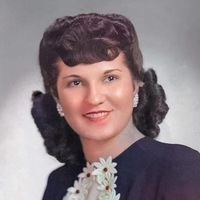
The world seems empty now,
solemn and still as a sacred vow.
The light which glanced from face to face
whenever her bright presence graced
gatherings of family and friends
joined like prayer beads end-to-end,
with voices raised in unbroken rhythm
which began like prayer and ended in hymn.
Such music we made as she led the chorus.
All she did, she willingly did for us.
How blessed we have been to have her near
for so many days of her ninety-five years.
The world now seems a colder place.
Yet, she still surrounds us with her warm grace.
Filed under FAMILY STORIES, POETRY

I have outlived my own mother,
one like no other, as yours must be ,too.
A mother who labored to bring me to life
then labored every day after
to create a world of joy and laughter,
joined by my father with teasing whiles
who kept a joke ready for when I most needed smiles.
Life struggles were an everyday event
twisted into humor at every bent.
Nothing could really bring us down
so long as we could laugh and play the clown.
Long gone are my parents, to play other venues
where they must have been needed,
while I continue to live honored and feted.
Happy birthday to me, yes, it is indeed
thanks to two people whose love brought forth
a daughter who could never fully explain their worth.
Being loved teaches love of self passed on to others.
Brought to each of us by our fathers and mothers,
if we are lucky enough to join such hearts.
Such love breaks every sorrow apart.
And, love leads to laughter beyond the here-after.
I still feel Dad’s touch tousling my hair
as Mom grunted a sigh of despair
at some forbidden lark I had dared.
I still sense their dismay when I leap into a fray
they would wish I had avoided,
or take a risky challenge simply to brighten my day.
I hear their voices of warning advising how to proceed.
Their teachings continue to meet my every need.
They may be gone beyond my sight
but they continue to live within a greater light
that fills the heart and seeds the mind just right
that I see Dad’s grin on my face as I pass a mirror,
or hear mom’s lilt as I sing at the kitchen sink,
recalling her tilt into dad’s arms as he gave me a wink.
Each day my parents gave to me
is wrapped like a present in distant memory.
I am thankful for the life they gave to me.
Filed under POETRY
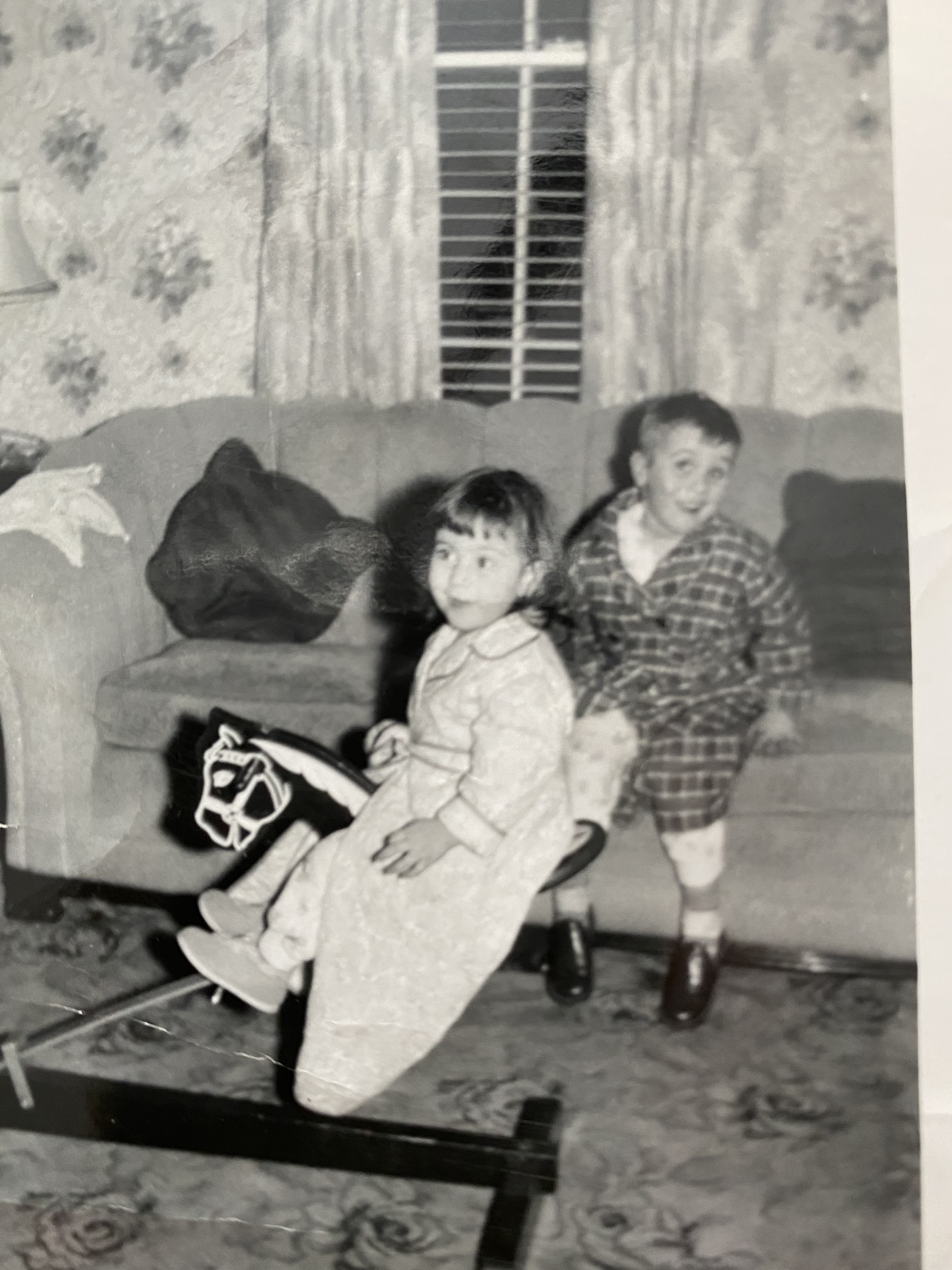
Thanksgiving has always meant more to me
than the holiday we celebrate happily
seated among broadened family.
It also means Angelo’s birthday.
He was born two years before I
on Thanksgiving Day,
and every 7 years or so
we could celebrate both joys
on the same day, November 28.
He has been gone too long,
yet memory remains
of a big brother
like no other.
A Sicilian American boy born
American to the bone,
Italian to the heart
whose need to be the Prince
was never questioned
except by me,
his pesty sister
who believed
she was his equal
in every way
on every day
in every play
trailing the gangly group of boys
across the street
down the alley
up the trees
over the banks
into the river
despite the words
“GO HOME”
where I would
have to play alone.
And so he let me stay.
Filed under POETRY

The dining table is the place
where family and friends gather
to partake of shared memory,
long history, and future planning.
I sit at a table with a leg cut short.
It wobbles and shakes discomforting
all seated round, frowning
and disconcerted, alerted to danger
of falling plates, tipped glasses.
We make an effort to stabilize the table
while grabbing utensils and protecting laps.
Some say, let’s move to another table.
Others look for a deck of cards
or a roll up napkins to place under
the shortened leg, while the rest wonder
how a simple meal could have become
such a disturbing conumdrum.
Any fix cannot last. The thought
of a restful meal is long past.
Many simply leave the scene
wanting only peace and a place
where they can eat decent meal.
The table can be fixed we know.
It will not be fast. Any fix should last.
Remove that bad leg and replace
with a leg that carries the table with grace.
Cutting off the other three
might improve the table’s stability.
But would anyone but the very small
fit at such a table, not brought low?
Ignoring the furniture in our world
has brought us to this?
No place to safely and calmly sit?
Filed under POETRY
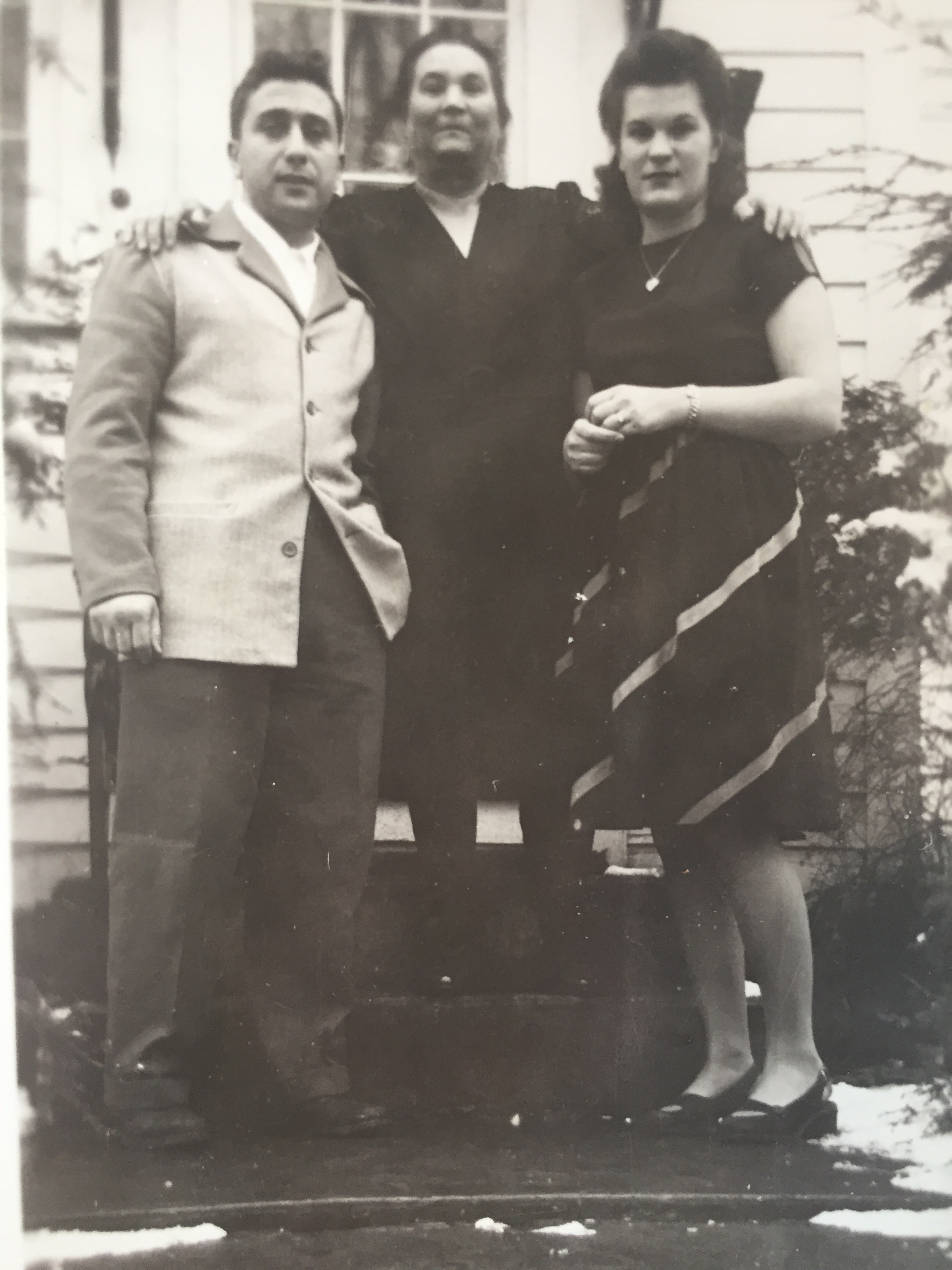
Sunshine pours through the window,
flows over the kitchen sink
and onto the table where I write
with fleeting glimpses of loved ones
passing through from day to night.
Gone forever.
Perhaps never
to be seen again.
Death is certain.
Eternity is not.
God could not have written
a better plot.
Filed under POETRY

“Shot.”
“Mom shot.”
“Dad shot.”
Dad lying atop
my tiny body.
Dad blocked
the shot
and the new word
death taught.
The new word
killed Mom.
Killed Dad.
Killed Family.
Killed us all.
Shot,shot,shot,shot!
Shot,shot,shot,shot!
Shot,shot,shot,shot!
Repeat it with me
over and over and over.
Mom shot.
Dad shot.
Shot,shot,shot,shot!
words no two year old
should know.
Shot,shot,shot,shot!
Shot,shot,shot,shot!
Shot.
Shot.
Shot.
Shot.
Filed under POETRY
Something in the blood calls my name.
The call brings neither glory nor shame.
We are connected but not the same.
Blood calls across all boundaries
from oceans crossed; and, all centuries
lost before I came to be by name.
Family traits, fair and foul, remain.
There is a knowing-ness difficult to explain.
Friendships are just as dear but not the same.
Something in the blood calls my name.
Filed under POETRY
Louise Annarino
November 20,2021
My mother’s kitchen was a restaurant.No visitor to our home left unfed. My father and his brothers actually opened a restaurant when they returned from military service following WWII. All my life I dreamed of opening a restaurant. I dreamed so last night. Really, what I dream of, is being back in my parents’ kitchens.
In Mom’s kitchen all was fragrant, warm and comforting. That tiny ten by ten foot space held a universe of possibilities. Packed in were a double-oven stove, refrigerator, sink, washer and dryer, and a round table with six chairs. The only way to reach the pantry was to climb above the washer and dryer. Working side by side in this cheerfully yellow painted space required a dance of consideration and subtlety, agility, and a sense of humor. It was not the single window above the sink which lit up this room; but, the love of creating sustenance for all who entered.
The kitchen was also our ballroom. Mom and I sang duets while listening to top hits on the radio, or sang Neapolitan love songs at the top of our lungs. In this space Mom taught me to dance the Mambo Italiano, Cha Cha, Charleston, Lindy Hop, Jitterbug, Polka, Fox Trot, Waltz and swing a dishtowel through the Tarantella. This meant pushing the table against the wall, moving out chairs, and putting aside our work for a few moments of sheer joy. Even so, bumping into things was inevitable and added to the laughter. The aroma of food nearing the end of cooking/baking time often saved the day.
The kitchen was also our parlor, where every guest was ushered past the living and dining rooms, and seated at the kitchen table. Immediately the coffee began to perk and whatever was in the oven or on the stove was soon shared. “No one leaves until they eat” was Mom’s sacred rule. New visitors soon learned that Mom meant what she said, and left sated.
In our home children could be “seen but not heard,”when adult guests were present. I learned of the larger world through conversations overheard at my Mother’s table. Freed to simply listen, and not add my “two cents”, taught me the invaluable lesson that truly listening to others is a great gift to the speaker and to the listener. Listening is gold. Sharing food and drink is platinum.
I also explored the larger war listening in on Dad’s kitchen table conversations. My father and his war buddies freely discussed their experiences as soldiers and sailors, the politics of war, the necessity of peace, the uselessness and danger of weapons in the home. I watched silently as they passed around Samurai swords, German Lugers and beer steins, and other artifacts bearing stories which would have remained hidden if my presence had been noted by my chatter. I learned to stay silent, openminded, and sensitive to the nuances of honest communication. After, Dad would talk with me to help me interpret what I had heard. As long as I stayed silent, I was never ushered out of the room. I learned that rules to control my behavior were not meant to deny my personal freedoms, inhibit my creative expression, nor demand too much of a child. Those rules were in place out of respect to the adults, and to me; to teach me to think as an adult, and to learn how to respect others.
When the women gathered, they too respected me enough to expect my respectful silence. Nothing was off the table when they spoke English. However, they sometimes used Italian if they wanted to keep some juicy tidbit from me. That did not actually work as they had planned because I soon picked up enough Italian to understand most of what they discussed. Of course, since I had to keep silent, I never gave away my ability to understand spoken Italian. This came in handy in public spaces when Mom and my aunts and cousins would comment on people around us without anyone knowing what they were saying. It was a useful tool on many occasions. it taught me the need for discretion when in public, in a way no lecture would have taught such a lesson.
Every Saturday night, the cousins who lived in our neighborhood spent the night at our house. in the afternoon, Mom simmered suga and meatballs in a massive restaurant pot, while kneading dough for pizza, bread and pizzafritta. The aromatic blend of oregano, garlic and basil in tomato sauce permeated the neighborhood. The aroma brought Niki, our dog to the foot of the stove, awaiting his meatballs. He had permanently stained orange whiskers and a love-hate relationship with Mom. Mom would make hundreds of ravioli at a time, freezing them for later use. She needed every surface in the house to dry the fresh pasta filled with cheese, spinach or meat; including the kitchen and dining room tables, washer and dryer, and even her bed…each surface covered with layers of clean, white sheets dusted with flour. Once, after distributing the ravioli throughout the house to dry, she forgot to close the bedroom door before leaving the house on an errand. Niki took advantage of the opportunity to reach the ravioli. He usually greeted us as soon as the door opened upon our return. That day, he was nowhere to be found as we searched the house. Mom noticed a double row of missing ravioli on the three sides of the bed he could reach. A moan from beneath the bed, then Mom’s curses, told the tale. Niki hid under that bed for two days, afraid to come out and face Mom’s wrath. She still continued to give him his meatballs every Saturday. She never could hold a grudge. A trait which served her four rambunctious children well.
The mouth-watering aroma also attracted our cousins and friends to our kitchen. That aroma speaks “home” to me to this day. In my many moves to new living quarters, the first thing I cook is suga and meatballs. The wafting aroma from my new kitchen tells me, “You are finally home.” We kids would hang about, playing cards at the kitchen table, until Mom sliced the fresh bread which we dipped in sauce as we ate our meatballs.
Some of the dough would be used Sunday morning for pizzafritta, fry-bread Italian style. The dough would be stretched into small rounds, dropped in hot oil, then pricked with a fork. Just when golden brown, Mom removed the fried dough from the pan and dropped it into a brown bag containing sugar; and shook it until the pizzafritta was covered in warm sweetness. She always did a separate bag with both cinnamon and sugar for me.
Later in the evening Mom stretched out dough for pizzas. After a prolonged argument with our friends and cousins, we would add the toppings we decided upon before Mom popped them into the hot oven. Laughing, teasing, and arguing, just for the fun of it, kept us busy until the satisfied moans of eating those pizzas made music around the table. Later, we put on our pajamas and settled into the living room to watch TV until Nightmare Theatre came on. By then, we were hungry again.But, Mom’s restaurant was closed for the night. That is when we called Dad at his restaurant.
One of us played waitress and took down each kid’s order: cheeseburger (BodyBuilders at Dad’s restaurant), french fries (fresh cut), onion rings, fried mushrooms, chocolate milk shakes, Coca-Colas. Since Dad was working hard on a Saturday night he would send our food to us in a cab, exchanging the delivery cost for the cost of the order he was serving to the cab driver sitting at the bar. To say we were spoiled is to put it mildly. No restaurant could ever match the food served by my Dad, or by my Mom.
Every Sunday and holiday, our kitchen became a party house. We always had guests for the noon meal, most of whom remained for left-overs later in the day. It was usually an all-day event. Grandparents, aunts, uncles, cousins and friends of my parents gathered around the extended dining room table; kids around the kitchen table. Kids were allowed to talk in the kitchen! So, it was the best seating in the house.The kitchen was our freedom space. We could laugh and joke around. My oldest brother Angelo thought it great fun to make someone laugh so hard he spewed his…or her… drink out his nose.
While Mom hosted the adults in the dining room, my job was to cut up food for the babies and toddlers at the kitchen table, and serve the other kids at the kitchen table. I was also the runner meeting requests from the dining room. Mom taught me the joy of serving others in a joint enterprise, and the strength developed by belonging to a team.
Even the clean-up taught team-work. The men scrubbed the heavy pots and pans. The kids removed small items to the proper place, the women washed, dried and put away the delicate plates and cutlery. As we all worked together the adults talked, and not about the weather. When the conversation really delved deep, the work stopped until that conversational thread had been fully explored. Clean-up took hours. And, then, we made more work for ourselves by serving coffee and dessert. The other kids who had disappeared suddenly resurfaced. The talking continued. Kids disappeared. The clean-up began anew.
I never opened my dream restaurant-bakery-tea room. I guess I never really expected to do so. Some dreams are meant for other purposes. I had seen how much devotion and sacrifice a restaurant requires. “Annarino Bros.Center Cafe’s” tilting sign hung over the alley-wide restaurant just off the square in Newark,Ohio. Returning to their hometown following their service in WWII, the four Annarino brothers could not find work, like many Italian-Americans and African-Americans, despite their service to their country. They positioned trestles across an alley between two downtown buildings, strung rope from which to hang items across the alleyway, and began cooking using outdoor grills.
As soon as they had enough money they added a roof and floor. Eventually, they completed the interior and had a restaurant an entire block long and alley-width wide. In the rear was the dishwashing and food prep area, a butcher shop, a walk-in refrigerator, a walk-in freezer. A partial loft over-head became the storage area. in the front was a very long narrow room with a bar its full length to the right, and booths on the left. In the from corner was a wine shop. The red vinyl covered barstools made great spinning games possible for kids who delighted in swiveling nervous energy while waiting for their Dad. In between were two dining rooms, separated by a folding accordion wall which could be pulled aside for larger gatherings.
We always knew how to find Dad. He was always available at the Center Cafe. He may not have made every dance recital or ball game but he was always there for us. We were sometimes relegated to sit quietly in an empty booth until he had a break in serving the needs of customers. We watched the world go by from that booth. Politicians, judges, lawyers and CEOs hung out there. They usually sat in booths. Working men on their way home from the factories usually sat at the bar. The interplay between these groups was fascinating to watch. I learned how power-plays work by observing these men.
As dinner hour approached the customer base shifted to families with children. Every child was warned by my dad or an uncle to eat all their dinner if they wanted some bubble gum, freely handed out as the family headed out the door after dinner. The dining rooms were a place of fascination. One table might be politicians discussing legislative strategy, another table a family discussing in-law strategy. The dining room at the restaurant was no different than the one in my house. Life was discussed, problems unearthed, strategies discussed and solutions found. At my parents’ tables there was always a solution. The world’s inhabitants were one big family. My parents made them each diner a member of our family.
We saw my Dad, my uncles, my grandfather and my cousins every day. The restaurant door was open to us, and it was a short walk uptown. Any request of my Mom for a special treat or rights to undertake an unusual endeavor resulted in the reply, “Go ask your father first and let me know what he says.” This is often the penultimate delay tactic in most families. But, we lived only a few blocks from the downtown and this was easily done. We simply walked to the restaurant, sometimes several times before we had convinced each parent of our wisdom.
As Dad considered our requests, we were put to work running errands to get more chops from the refrigerator, clear a table, push the dish cart to the dish washer, load and wash dishes, peel potatoes, climb to the storage area and get more pasta, slice pies coming out of the oven in the back.
The grill work was done up front, behind the bar. Pots of suga, soups or stew simmered on the range behind the bar. Steaks sizzled on the broiler behind the bar. Mushrooms and potatoes crisped in fryers behind the bar. The ovens were in the back. This block-long restaurant wore out our dad’s uncles’ legs.
Kids became the runners whenever we showed up. We might be sent to the store to fetch products which had run low with unexpectedly high demand. We would accompany Dad to the bank with a deposit. We would talk with the fathers of our school chums, facing an inquisition regarding their son’s or daughter’s behavior at school. This taught us loyalty. In the meantime Dad would come up with a solution he and Mom could live with. By then, we were too tired out to argue much. I think I know now why Dad always had a grin on his face when we showed up.
When we had a serious concern, we simply waited in the “family” booth until Dad had time to hear what was on our mind and offer his wise counsel and firm support. And our uncles, and sometimes waitresses passing by the booth, offered suggestions. Then Dad would make a joke to ease our worries and we would both grin.
Sitting at the bar was an education. The entire town seemed to sit at that bar. Customers spoke with us about their factory job, their wives and children, the latest political upheaval, the new construction in town, the new teacher, doctor, insurance agent, priest, minister, rabbi in town. I guess they thought a kid sitting at a bar could take it. Of course those sitting at the bar had had a drink to loosen their tongues. Bar-tenders…and their kids…hear everything.
Sitting behind the bar on Great-uncle George’s stool was even more lucrative. I sold thousands of candy bars for school fund-raising efforts from that stool. Dad counseled me to count the drinks each man drank; and to not try to sell my candy bar or raffle ticket until the customer was on his second drink. Later, as they settled their bill I would always suggest they take a candy bar home for their kids. It worked like a charm. And I have the St. Joseph statue awarded for top sales to prove it.
We learned to be entrepreneurs from Mom and Dad’s kitchens. Home from school one day I was sitting at the table as Mom looked through recipes deciding what we would cook that day. I saw a recipe for rum fondant. Soon I had created fruit shaped candy, painted with food coloring and placed in one of mom’s milk-glass candy dishes atop left-over Easter grass.
Dad saw my production when he came home from the restaurant after midnight, and took it tback work before I had arisen the next morning.
When I came home from school that day, Mom showed me the 32 orders Dad had taken for a bowl of rum fondant fruit at $3.50 per bowl. Every day for months I rolled and painted fruit for candy bowls. By summer I had collected over $2,000 which I used to take our entire family to the World’s Fair in NYC for a week. It was dream come true. The entire world, not just Newark Ohio, came through our door thanks to Mom and Dad’s kitchens. An open door works both ways. I miss those kitchens.
Filed under Uncategorized
 annarino writes