WWII Era Bark Print from Tonga, Tonga. Photo by L. Annarino
These war buddies who mourned those buddies who died in combat, and who treasured those who sat with them in solidarity at our kitchen table, shared more than stories. They shared themselves. Mom and I quietly listened, staying in the background, granting them sacred space.
My dad did not collect war trophies. He collected books and papers, which I read and pored over. My favorites were a book telling the history of the USS South Dakota, and one illustrating the flags of every nation. The first spoke of valor and patriotic duty fulfilled by every sailor aboard. The second helped Dad identify incoming planes, separating enemy from ally. I considered this a most useful tool; one I employ to this day, always searching out tell-tale signs of enemy incursion into my life and the lives of others. It may be one reason I eventually became a lawyer whose favorite tool is cross-examination. I am always looking for the “false flags” flown by lawyers, newspersons, politicians and servants of the people. There have been too many lately.
I read Dad’s folder containing assignment memos and his letters of commendation, held his battle ribbons and medals in my hands, marveling at the battle stars gleaming dully after being carried through the war. I have the Tongan Island bark tapestry he bought from the King of Tonga in exchange for a case of beer he hauled from his ship onto the beach where Tongan women were making such artistry.
My father fought his way through WWII. When he finally returned to his Ohio hometown, my pregnant NYC Mom in tow, he had a new fight on his hands. The fight of all first generation immigrants to find a way to support his family, and protect other such families living in pockets of real estate abandoned by earlier immigrants; along industrial-polluted rivers, smoky rail-road tracks, and industrial waste areas.
Dad and his brothers, who had served in the US Army as cooks joined their brother, excused from duty because of tuberculosis, and a cousin; and opened a restaurant. This restaurant was not a food truck as today’s start-ups. No, they found a vacant alleyway between two buildings, put sawhorses covered by planks between the two buildings, collected a grill and started cooking. They hung supplies held by ropes strung between the two buildings. They soon had enough money to add a roof, then a floor. Eventually they had a full-service restaurant a block long and alley-wide with a half-block long bar and side booths. the space behind held two separate dining rooms, a butcher shop, walk-in freezer, walk-in refrigerator, kitchen and dish-wash area, and storage rooms above and below.
These Italian-American men supported their families; and fed the homeless, emergency workers in the event of community storms, floods, and fires. They cooked for the church and seminary fund-raisers. They contributed in every way they could to the welfare of every person in the community. New immigrants are grateful and hard-working in ways earlier arrivals to our shores have long forgotten. I remember.
My cousins and I spent hours at the Center Cafe, sitting in the family booth or behind the bar talking to our great-uncle with a cauliflower ear about his award-winning boxing career. Dad hung a boxing bag inside our garage and bought us boxing gloves. I sparred with my older brother and punched along with the boys. As a female lawyer, when that was a rarity, I happily and effectively sparred with boys in and out of court. Sicilian and Italian men love their women and make sure they are safe and can defend themselves.
Sitting behind the bar selling candy bars for my Catholic elementary school was fun. Dad instructed me to count how many beers a man consumed, and not to approach him until he had had 2-3 beers. He concluded I would sell more candy that way. I always won a prize for selling the most candy. Dad knew how to buy and sell. Living on a salary of $50 per week his entire work life meant he had to stretch every penny to rear 4 children and send them all to Catholic school. We kids all worked from childhood on to buy comic books, ice cream and penny candy. Later, to pay tuition, go to the dentist, buy clothes, books and phonograph albums. We all contributed because we were a family.
The best part of hanging out in the restaurant was listening to patron conversations, especially listening to the men at the bar. All classes of people ate there. Families felt comfortable bringing their children to a place where drunkenness was not allowed. Dad and his brothers knew their customers who became family to them. I watched Dad order cabs and send men home after ‘cutting them off’. He called wives to explain what to expect, assuring them the salary earned that day was still in their husband’s pocket.
I listened to lawyers, judges, CEOs, insurance agents, grocers, plumbers, factory workers, mechanics, gas station owners et al whose faces and voices I recognized because they came every day for breakfast, or lunch, or after-work drinks before heading home. What a cacophony of human behavior and community thoughts were shared between booths and bar. All orchestrated by Dad and his brothers. The music of the masses sang out for all to hear, if they were listening. It still does. If we listen. And we must listen, looking and listening for false flags.
I was born 2 years after Dad returned home, after serving in the US Navy. He enlisted after high school graduation. A first generation Italian-American he was un-hireable. He hitch-hiked to the Great Lakes Naval Station with a nickel in his pocket and enlisted. Dad was a brilliant man, one of the first electronics experts. While his ship the USS South Dakota ( the most decorated battleship of WWII) was in dry-dock for repairs after being towed back to New Jersey from the South Pacific, dead in the water after a fierce battle with the Japanese, he taught electronics at Yale. Once the ship was seaworthy, he returned to battle.
At the Harry Truman Museum a replica of his sister ship, the USS Missouri, is on display as it is the ship where the Japanese surrendered. Dad showed me his firing position inside the cramped and overheated turret. As he continued his explanations his stories drew a crowd, asking more questions. I watched my Dad enthrall over one hundred visitors for more than two hours, offering them a true account of why war is always hell.
Dad first escorted munitions to Great Britain as The US lend-lease effort. Many in the United States did not see the need to oppose Hitler and aid Europe. There was no NATO, nor United Nations yet.They soon learned the short-sightedness of such America First policy when Pearl Harbor was attacked. Dad was there, but the South Dakota was out on training maneuvers when the Japanese strike on Pearl Harbor occurred, one of two ships not damaged nor destroyed that day. Within hours those two ships headed out to the Pacific to engage the Japanese.
As an infant I sat on Dad’s lap as Mom served food and drink to his fellow servicemen returned from war. As I become a toddler, I sat silently at his feet, listening to their stories, feeling their angst, learning their wisdom. As a young girl, I sat quietly listening in the next room. Some Had fought on land, others at sea or in the air. One freed a concentration camp. Others fought the jungle and suicidal enemy soldiers. Dad explained that when the kamikaze pilots attacked by diving onto the ship it was not a single plane but as many as 9 or 10 planes hurtling to the deck during a single battle. He felt like he was on fire inside the turret, as sailors put out fires caused by the crashed planes.
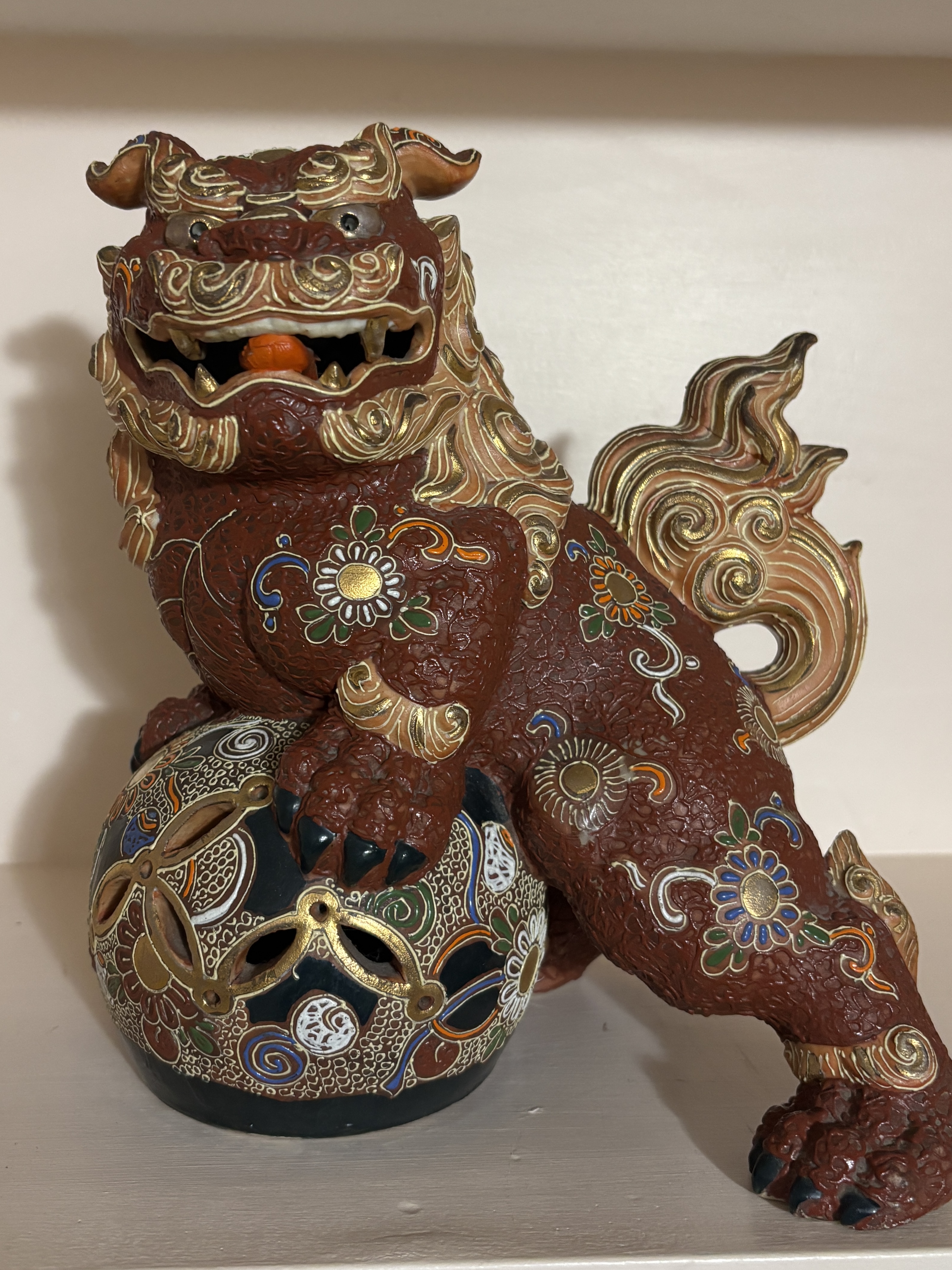
I watched as they placed mementos of their war experience on the table, each with a story. I recall Nazi helmets, German Lugars, even a Samurai sword. I still have a “lion dog” one soldier was given by a Japanese family who housed him during the American occupation of Japan following the bombing of Hiroshima and Nagasaki. They treated him like a son of the family as they came to know one another. So many lessons learned through these artifacts.
These warriors appreciated that bomb and I struggled to understand how after hearing them describe the destructive force and damage caused by the nuclear blast ( far less powerful than the nuclear bombs we now have ready). They explained that there could have been no surrender without it. They said many more would have died and suffered if the war had continued on. When Americans built underground bomb shelters in case we were attacked by Russia, my Dad said it would be better to die in the attack than survive and suffer the results of nuclear exposure. My Dad told his little girl this. He told me war is always hell. He did not want his children to suffer hell on earth; better that they died immediately.
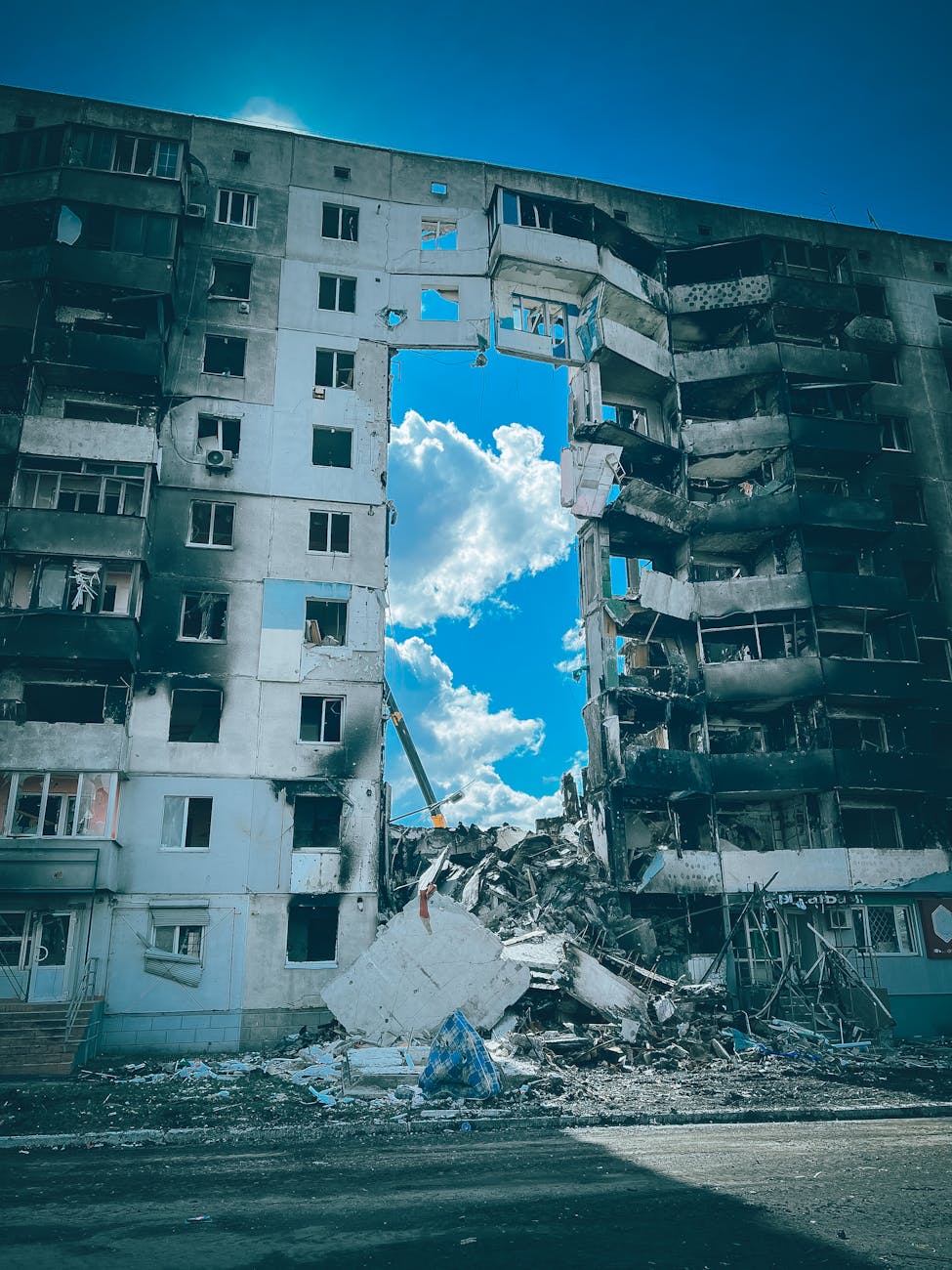
Such are the difficult decisions made during war. Every single man at our kitchen table agreed there should never be another war. In fact, WWII was billed as “The war to end all wars.” If only, Soon my godfather would be sent to Korea. Later my brother would be involved in the Viet-Nam War. Next a nephew fought in Iraq. Afghanistan after 9/11. Now, a great-nephew has been sent to The Border in Brownsville, Texas. Other soldiers are being prepared to make war in Minneapolis. My country has made war on VenezuelaIa. It threatens war against Mexico, Greenland and Canada. Remember that there was a Japanese delegation in Washington D.C. protesting American tariffs and a trade war between our nations when Pearl Harbor was bombed in a sneak attack.
It seems I have only ever known war. Yet, I have never known war. War has been visited upon others in my name. Until now. War is now showing its face, if not its full vengeance, in American cities. The Civil War happened before my family emigrated to the United States. I was so relieved my family had never participated in enslaving others. Later, I understood I was participating as policies underlying enslavement continued within institutional racism. There is no escaping racism. It is akin to being an alcoholic in a 12 step program. We Americans, even those with the strongest will and opposition to racism, must fight it one day at time, one step at a time; always alert to the impulse which drives us to use it. Like alcoholism, a drink may be an immediate solution; but only leads to more misery. And such misery continues to be visited upon people of color. The murder of Ms. Good and Mr. Pretti may have finally alerted white Americans to the misery visited upon all of us, when visited upon any one of us.
After Dad’s war buddies left I would question my Dad. I asked if it was hard to kill someone. Watching the war documentaries in between the Saturday double-features at the Midland Theater I could not understand how people could do such evil to one another, especially the death camps throughout Europe. Much later, I learned of the Japanese internment camps in my own country. The mother and father of a friend had been interred in such a camp and described the suffering and loss they had endured, sobbing out stories with great grief. Dad explained how such evil can happen. He told me that it is incomprehensible to a sane person to kill. The method used is to dehumanize the enemy so one no longer sees the person as a fellow human being; not merely someone different, but someone less than human. A German becomes a Kraut. A Japanese becomes a Jap. A Vietnamese becomes a gook. An Iraqi becomes a towel-head. A Jew becomes a K..e. An African-American becomes a N…..r. An immigrant, asylum seeker or refugee becomes the worst of the worst criminal rapist and murderer. Not just different but less. Now, we have our own concentration camps after our WWII soldiers fought to free concentration camps in Europe. I know what the men at our kitchen table would say. They understood the propaganda that white men are not only superior, and all others are less. The men at our table knew better.
I asked why it took Pearl Harbor for the USA to join the war effort. He explained the appeasement of “old man”Kennedy and Prime Minister Neville Chamberlain failed to assess the true danger posed by Hitler and Mussolini. Kennedy lost a daughter and son to the war; and a second son injured during a heroic effort. I wonder if later he could see his folly. I wonder if Heritage Foundation appeasers can see theirs. I wonder if voters will admit their folly in electing people ready to put their Superior policies into action.
our fascists try to build along our southern border.
To keep brown people out? Or keep us in?
Is America becoming a giant camp
concentrating those exercising free speech,
free movement and all dissent beneath the thumb
of authoritarian diatribe and power, making us numb
and willing to cooperate with endless hate?
I honor those who once fought to save the world
and keep it free from hate and bigotry,
and create a fair economy which served us all.
I see the last ditch in my mind with no need to recall.
It lives on every street, in every neighborhood,
in every school board meeting, and City Hall;
in governor’s mansions and courts of law.
It is still alive these many years
and brings anger along with tears
burning the back of my throat
as I mourn those who breached the fascist wall
and those whose bodies I imagine afloat
off Omaha and Utah Beaches, and now, in our cities.
And I remember, as if it is today. It is. Such a pity.
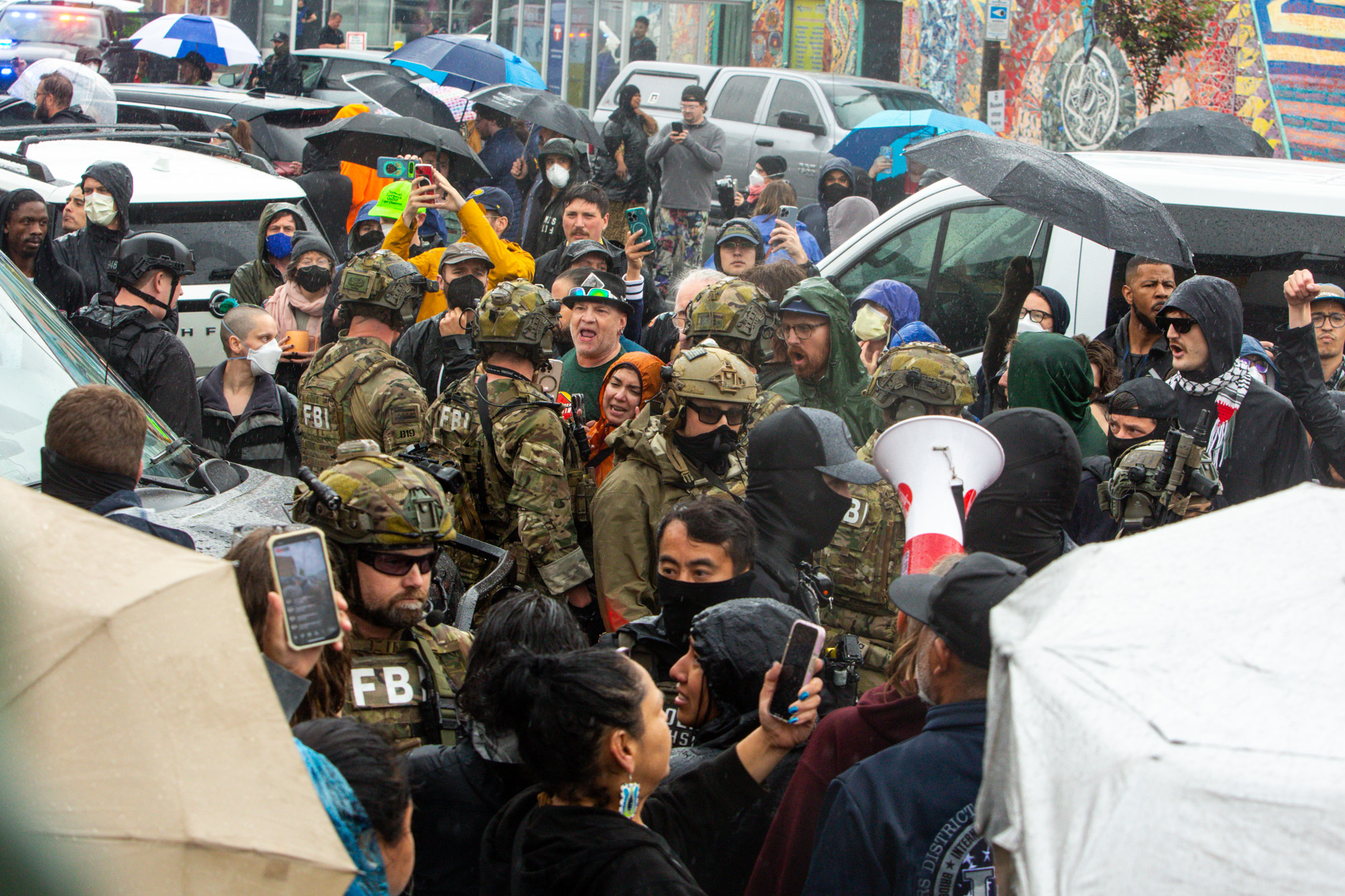
Community members clash with ICE, other federal officers, Minneapolis police, and other state officers as officials raid Las Cuatro Milpas in Minneapolis, Minnesota Tuesday, June 3, 2025. (Photo by Nicole Neri/Minnesota Reformer)



 annarino writes
BORN IN THE USA, Part 2
These war buddies who mourned those buddies who died in combat, and who treasured those who sat with them in solidarity at our kitchen table, shared more than stories. They shared themselves. Mom and I quietly listened, staying in the background, granting them sacred space.
My dad did not collect war trophies. He collected books and papers, which I read and pored over. My favorites were a book telling the history of the USS South Dakota, and one illustrating the flags of every nation. The first spoke of valor and patriotic duty fulfilled by every sailor aboard. The second helped Dad identify incoming planes, separating enemy from ally. I considered this a most useful tool; one I employ to this day, always searching out tell-tale signs of enemy incursion into my life and the lives of others. It may be one reason I eventually became a lawyer whose favorite tool is cross-examination. I am always looking for the “false flags” flown by lawyers, newspersons, politicians and servants of the people. There have been too many lately.
I read Dad’s folder containing assignment memos and his letters of commendation, held his battle ribbons and medals in my hands, marveling at the battle stars gleaming dully after being carried through the war. I have the Tongan Island bark tapestry he bought from the King of Tonga in exchange for a case of beer he hauled from his ship onto the beach where Tongan women were making such artistry.
My father fought his way through WWII. When he finally returned to his Ohio hometown, my pregnant NYC Mom in tow, he had a new fight on his hands. The fight of all first generation immigrants to find a way to support his family, and protect other such families living in pockets of real estate abandoned by earlier immigrants; along industrial-polluted rivers, smoky rail-road tracks, and industrial waste areas.
Dad and his brothers, who had served in the US Army as cooks joined their brother, excused from duty because of tuberculosis, and a cousin; and opened a restaurant. This restaurant was not a food truck as today’s start-ups. No, they found a vacant alleyway between two buildings, put sawhorses covered by planks between the two buildings, collected a grill and started cooking. They hung supplies held by ropes strung between the two buildings. They soon had enough money to add a roof, then a floor. Eventually they had a full-service restaurant a block long and alley-wide with a half-block long bar and side booths. the space behind held two separate dining rooms, a butcher shop, walk-in freezer, walk-in refrigerator, kitchen and dish-wash area, and storage rooms above and below.
These Italian-American men supported their families; and fed the homeless, emergency workers in the event of community storms, floods, and fires. They cooked for the church and seminary fund-raisers. They contributed in every way they could to the welfare of every person in the community. New immigrants are grateful and hard-working in ways earlier arrivals to our shores have long forgotten. I remember.
My cousins and I spent hours at the Center Cafe, sitting in the family booth or behind the bar talking to our great-uncle with a cauliflower ear about his award-winning boxing career. Dad hung a boxing bag inside our garage and bought us boxing gloves. I sparred with my older brother and punched along with the boys. As a female lawyer, when that was a rarity, I happily and effectively sparred with boys in and out of court. Sicilian and Italian men love their women and make sure they are safe and can defend themselves.
Sitting behind the bar selling candy bars for my Catholic elementary school was fun. Dad instructed me to count how many beers a man consumed, and not to approach him until he had had 2-3 beers. He concluded I would sell more candy that way. I always won a prize for selling the most candy. Dad knew how to buy and sell. Living on a salary of $50 per week his entire work life meant he had to stretch every penny to rear 4 children and send them all to Catholic school. We kids all worked from childhood on to buy comic books, ice cream and penny candy. Later, to pay tuition, go to the dentist, buy clothes, books and phonograph albums. We all contributed because we were a family.
The best part of hanging out in the restaurant was listening to patron conversations, especially listening to the men at the bar. All classes of people ate there. Families felt comfortable bringing their children to a place where drunkenness was not allowed. Dad and his brothers knew their customers who became family to them. I watched Dad order cabs and send men home after ‘cutting them off’. He called wives to explain what to expect, assuring them the salary earned that day was still in their husband’s pocket.
I listened to lawyers, judges, CEOs, insurance agents, grocers, plumbers, factory workers, mechanics, gas station owners et al whose faces and voices I recognized because they came every day for breakfast, or lunch, or after-work drinks before heading home. What a cacophony of human behavior and community thoughts were shared between booths and bar. All orchestrated by Dad and his brothers. The music of the masses sang out for all to hear, if they were listening. It still does. If we listen. And we must listen, looking and listening for false flags.
Leave a comment
Filed under COMMENTARY, FAMILY STORIES, POLITICS
Tagged as bar talk, bars, cafes, comunity, else flags, family, history, homeland security, immigrants, immigration enforcement, Life, love, MAGA, memories, military, politics, propaganda, restaurants, TOM HOMAN, Trump administration atrocities, US Navy, WRITING, WWII